Table of Contents
- Introduction
- What Does Over-Planning a Wedding Really Mean?
- The Pressure to Create a “Perfect” Wedding
- How Over-Planning Impacts Emotional Well-Being
- Decision Fatigue and Wedding Burnout
- Losing Sight of the Wedding’s True Meaning
- How Social Media Fuels Over-Planning
- Real Regrets Couples Often Share After the Wedding
- Finding the Balance: Planning with Purpose, Not Pressure
- How Thoughtful Venues and Vendors Reduce Over-Planning
- Conclusion
Introduction
There’s a particular kind of romance in the early days of an engagement. The phone calls are softer, families sound a touch more generous, and even spreadsheets, briefly, feel like a promise. In India, wedding planning is rarely a private project; it arrives with a chorus of opinions, inherited rituals, budget realities, and the unspoken need to make everyone feel included. For a while, it’s thrilling. Then, almost imperceptibly, the planning becomes the wedding.
I’ve watched couples begin with a clear vision, warmth, meaning, a few breathtaking moments, and end up running a production schedule that could rival a film set. The irony is that the more meticulously they try to design every second, the more fragile the experience becomes. Over-planning a wedding doesn’t just create long to-do lists; it can quietly steal the very emotions couples are trying to protect: joy, presence, anticipation.
This is why wedding planning regrets have become a familiar aftertaste. Not because couples didn’t care enough, but because they cared so much, in a world that equates “more” with “memorable.”
What Does Over-Planning a Wedding Really Mean?
Over-planning a wedding isn’t simply being organised. It’s the moment organisation turns into over-control: when every breath of the celebration must be curated, photographed, timed, approved, and optimised.
It often shows up as an obsession with micro-decisions, ten versions of the same floral shade, multiple outfit changes squeezed into a short function, a “content plan” for each ceremony, and a run-of-show so tight that no one can laugh without checking the clock. Couples think this level of precision will prevent chaos. Sometimes it does. But it can also produce a different kind of chaos, one that lives inside the mind.
Among the common wedding planning mistakes, over-planning is the most socially rewarded. People praise the “attention to detail,” the “Pinterest-level execution,” the “insane logistics.” Yet the real question is quieter: did it feel like you?
The Pressure to Create a “Perfect” Wedding
Modern wedding planning challenges in India are shaped by a unique mix of tradition and performance. Families want rituals done correctly. Couples want the wedding to reflect their taste. And the broader culture, relatives, peers, even colleagues, expects spectacle.
In luxury and destination weddings, the pressure intensifies. When you’re flying guests in, booking multiple events across days, and orchestrating design narratives, perfection begins to look like a responsibility. Couples can feel that if one element looks off, they have “failed” the occasion.
This is where wedding planning expectations vs reality becomes painfully visible. Expectations say you’ll be glowing through every function, effortlessly hosting with elegance. Reality says you’re arguing about vendor calls at 1 a.m., worrying about weather, and wondering why you feel numb during your own mehendi.
Wedding planning pressure in India is often disguised as love, “We just want it to be the best day of your life.” But “best” becomes a moving target when perfection is the metric.
How Over-Planning Impacts Emotional Well-Being
The emotional impact of wedding planning is rarely discussed with the seriousness it deserves. We talk about budgets and décor trends with ease, but when a couple admits they’re overwhelmed, the response is often dismissive: “This is normal, it’s only for a few months.”
But over planning wedding stress doesn’t stay within “a few months.” It can seep into the relationship.
When every conversation is a decision, romance becomes transactional. Partners start to sound like managers: “Did you confirm the entry song?” “What’s the backup for rain?” “Who is handling the return gifts?” The tenderness that should define this season is replaced by efficiency.
Some couples also experience guilt, guilt for not feeling excited enough, guilt for snapping at parents, guilt for not being the version of themselves they imagined during this milestone. Others feel a kind of emotional flatness, as if their nervous system has decided it can no longer afford enthusiasm.
Decision Fatigue and Wedding Burnout
One of the most underestimated causes of wedding burnout for couples is decision fatigue, the mental exhaustion that comes from making too many choices, too frequently, under scrutiny.
Indian weddings multiply decisions by design. Each function invites its own outfit, styling, lighting, menu, music, guest list, seating logic, gifting etiquette. Add destination logistics or luxury-scale production, and the choices become relentless.
Decision fatigue doesn’t just make you tired; it changes how you decide. You become more reactive, more likely to choose what’s safe, what pleases others, or what ends the conversation fastest. Couples tell me later that they barely remember choosing key details. They outsourced not just tasks, but intention.
This is why mistakes couples make while planning weddings often aren’t “bad taste” errors, they are exhaustion errors. Decisions made under stress rarely align with the heart.
Losing Sight of the Wedding’s True Meaning
The wedding is not an event; it’s a threshold. In Indian culture, ceremonies are designed to hold meaning across generations, rituals that tie a couple to community, ancestors, and the future. But the moment planning becomes a performance, meaning can fade into the background.
Over-planning a wedding can reduce rituals into “segments.” You begin asking: How long will the varmala take? Can we shorten the pheras? Will the pandit accommodate a quicker script? These questions are sometimes necessary. Yet when everything is optimised for speed and visuals, couples can feel like guests in their own story.
There’s also a subtle loss when families feel managed rather than welcomed, when elders are rushed through moments they understand as sacred, or when spontaneity is treated as a threat to the schedule. The wedding may look extraordinary, but it can feel strangely thin.
How Social Media Fuels Over-Planning
Social media doesn’t just inspire weddings; it standardises them. It turns private choices into public benchmarks.
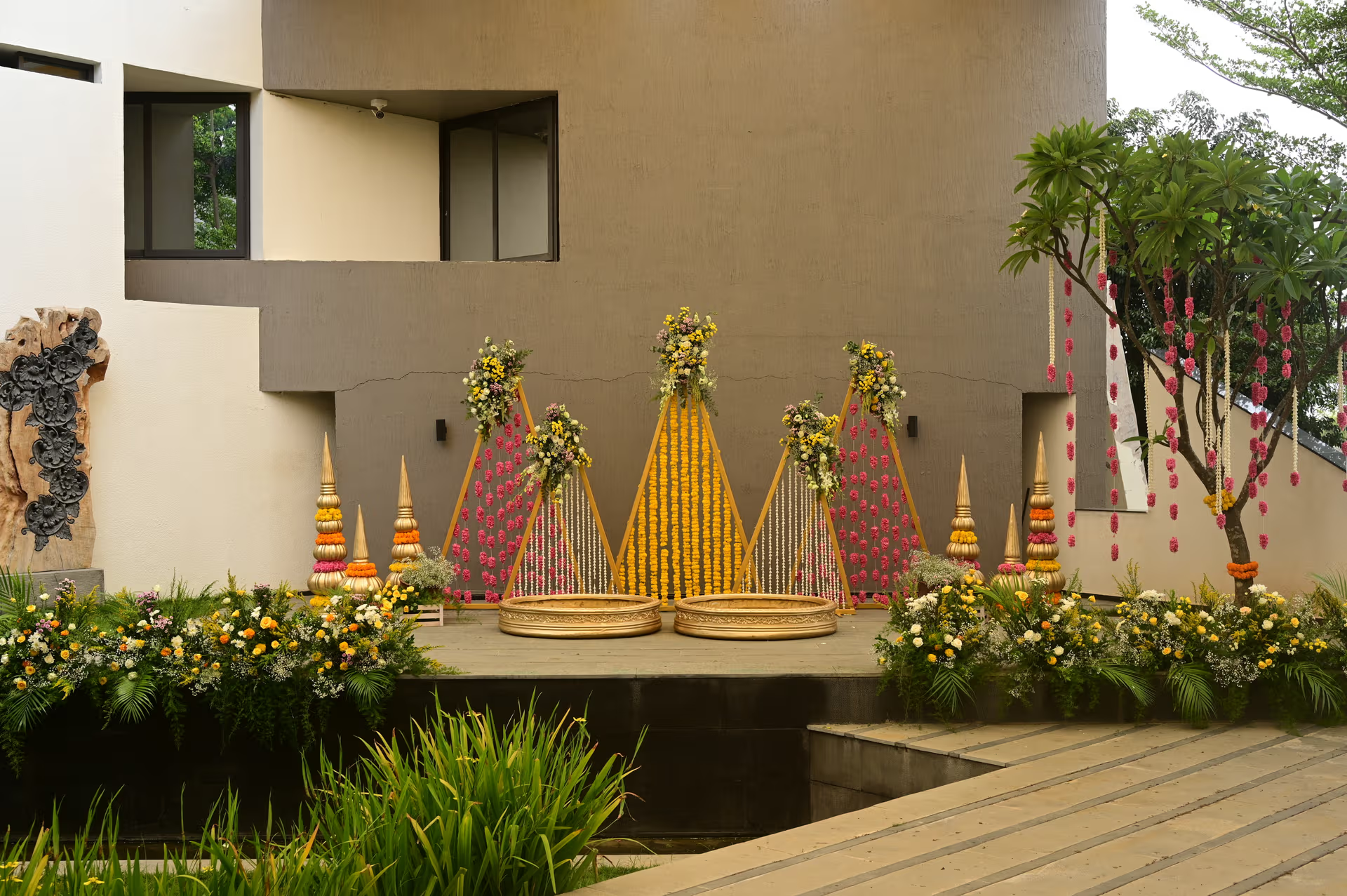
Couples aren’t only planning a celebration anymore, they’re planning how it will be perceived. The “aesthetic” becomes a requirement. A mehendi is no longer a relaxed afternoon of music and laughter; it’s a themed set with curated signage, coordinated outfits, and a photographer’s checklist.
This isn’t inherently wrong. Beautiful design can be deeply moving. The problem begins when the camera becomes the main guest.
Social media also fuels comparison, which is the fastest route to dissatisfaction. Even after spending generously, couples can feel they didn’t do “enough”, not enough drama in the entry, not enough novelty in the décor, not enough uniqueness in the favours. The algorithm rewards the extreme. Real life does not.
Real Regrets Couples Often Share After the Wedding
Wedding planning regrets tend to sound similar across budgets and styles, because they come from the same emotional place.
Many couples say they don’t remember their own wedding clearly. They recall fragments, the pressure of being on time, the discomfort of heavy outfits, the constant pull of someone asking for instructions. They regret not eating, not dancing, not sitting with grandparents, not taking a quiet minute together.
Others regret the tension. They hate that their engagement year is remembered as a season of fights and fatigue rather than intimacy. Some regret how they treated each other, short tempers, defensive conversations, a sense that love became a project.
Another common regret is chasing “wow” at the cost of comfort. Guests may be dazzled, but the couple is exhausted. The celebration becomes something to survive.
And finally, there’s the regret of outsourcing joy. Couples sometimes realise that in trying to please everyone, family, friends, online audiences, they lost the chance to choose what truly mattered to them.
Finding the Balance: Planning with Purpose, Not Pressure
Stress free wedding planning tips often sound like productivity advice: start early, use checklists, delegate. Those help, but the deeper shift is philosophical.
Planning with purpose means deciding what you want to feel, not just what you want to show.
If you want to feel calm, you design breathing room into the schedule. If you want to feel connected, you protect moments that encourage togetherness, shared meals, unhurried rituals, time with close friends. If you want to feel present, you resist over-staging every interaction.
It also means defining “enough.” Enough functions. Enough décor. Enough content. Enough guests.
One of the wisest moves couples make is to identify three priorities, and let everything else be supportive, not central. This isn’t minimalism for its own sake; it’s clarity. It reduces the noise that leads to over-planning a wedding.
Balance also requires compassion. Indian weddings are emotional for families. There will be opinions. There will be last-minute changes. Couples who plan with purpose treat these not as threats to perfection, but as part of the living texture of a wedding.
How Thoughtful Venues and Vendors Reduce Over-Planning
There is a reason some weddings feel lighter even when they’re grand: the ecosystem is built to hold complexity without passing every decision to the couple.
A thoughtfully designed venue reduces the need for constant problem-solving. When spaces flow naturally, when logistics are integrated, when the guest experience is intuitive, couples aren’t forced to micromanage.
This is where an institutional venue profile like Wiwaha by Praman becomes relevant, not as a sales pitch, but as an example of how infrastructure can influence emotion.
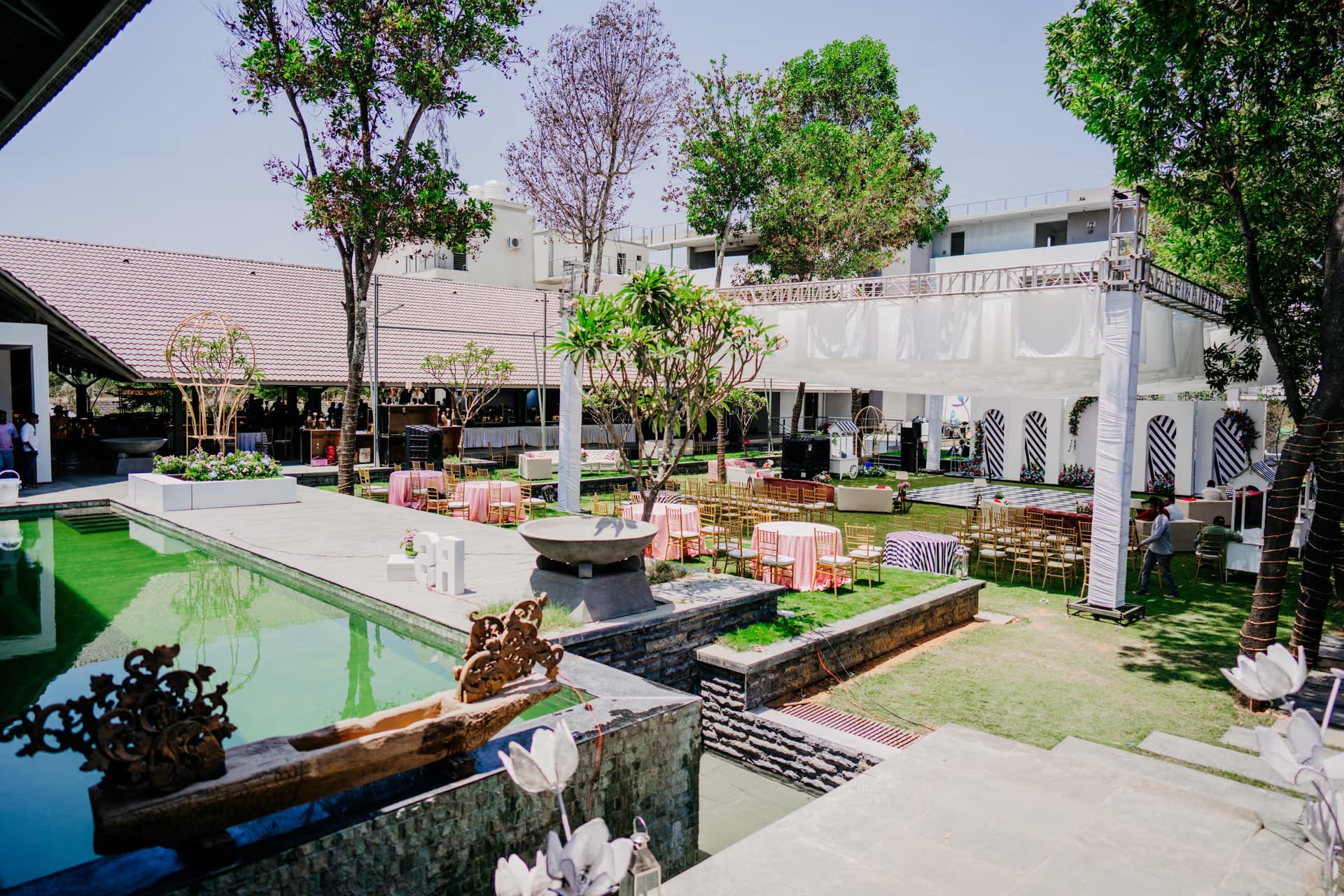
Set in the Bettahalsoor/Yelahanka region of North Bengaluru, Wiwaha is conceived as a purpose-built celebration campus rather than a conventional banquet hall. Its Balinese-inspired landscapes and open-air layouts create a resort-like calm that quietly counters the intensity of Indian wedding production. The value, from a planning perspective, lies in integration: expansive outdoor settings alongside refined indoor halls, a covered dining space designed for high guest throughput, and multiple experience zones, from lawns to amphitheatre-style corners and curated photo locations.
For couples managing multi-day celebrations, such a venue can reduce the number of moving parts. Instead of transporting guests across the city, you can host mehendi, sangeet, wedding, and reception within a single, coherent environment. On-site accommodation, guest rooms and bridal suites, means fewer timelines built around traffic, fewer emergency runs, fewer moments of avoidable stress.
Equally important is support. When a venue ecosystem includes coordination assistance, vetted technical partners, and infrastructure like power backup, access routes, and ample parking, the couple is freed from making dozens of low-value decisions. They can focus on the high-value ones: what matters emotionally, culturally, relationally.
Great vendors do the same. The best planners and designers don’t add complexity; they edit it. They protect the couple’s attention. They translate vision into execution without turning every preference into a referendum.
Conclusion
A wedding in India will always carry scale, of rituals, of relationships, of memory. But scale does not have to mean strain. When couples regret over-planning a wedding, they’re rarely regretting the beauty. They’re regretting the cost: the stress that entered their home, the tenderness that was postponed, the moments that slipped past while they were managing the moment.
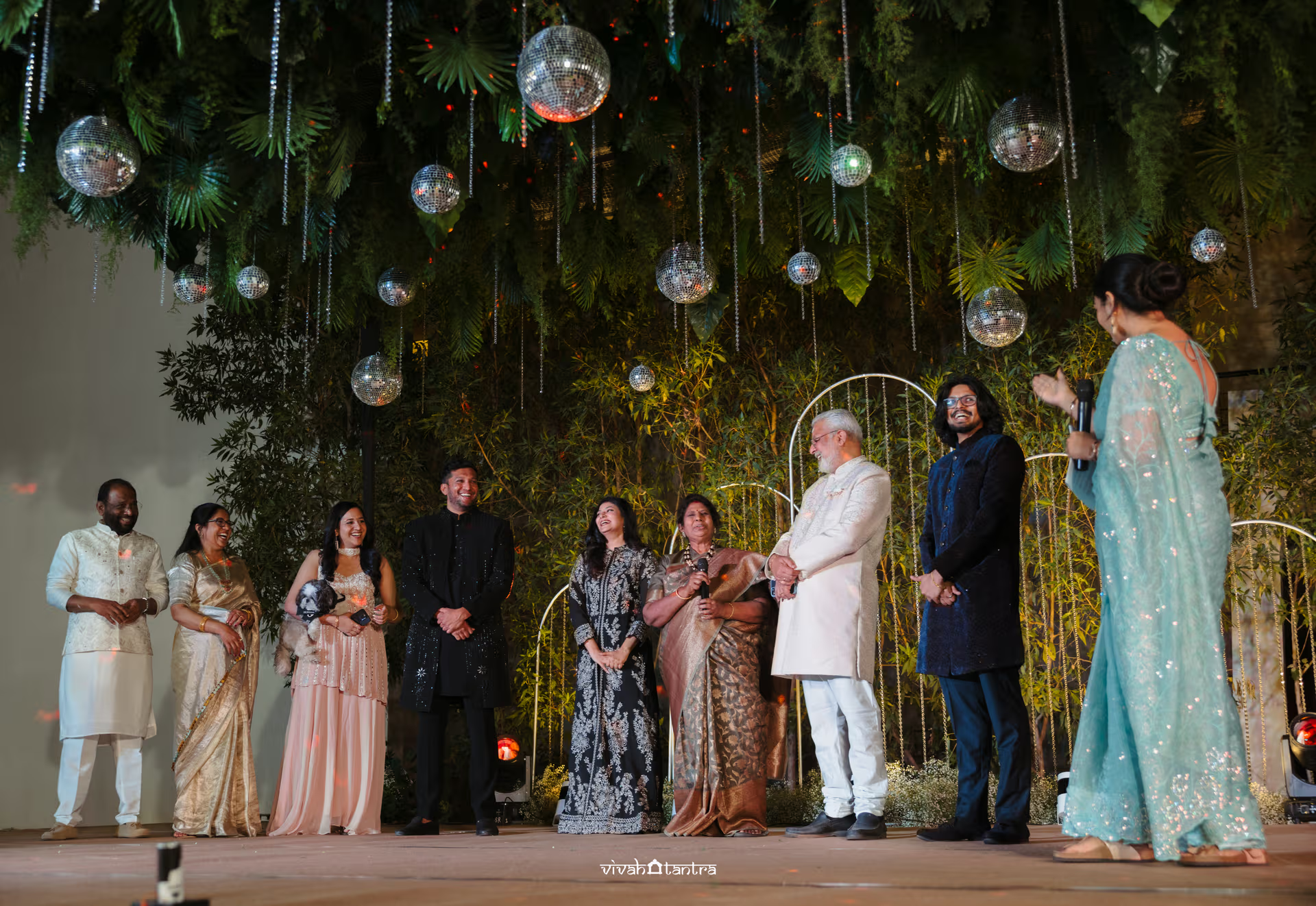
The most unforgettable weddings are not always the most engineered. They are the ones where the couple looks like they belong to the day, where laughter interrupts the schedule, where family feels held rather than handled, where the celebration breathes.
Perhaps that is the quiet lesson: planning is meant to serve love, not replace it. And sometimes, the most elegant choice a couple can make is to let go, just enough, to actually be there.