Table of Contents
- Introduction
- Section 1: Common Wedding Logistics Issues That Frustrate Couples and Guests
- Section 2: How to Ensure Smooth Flow Between Wedding Zones
- Section 3: Why Timeline Hiccups Occur and How to Avoid Them
- Section 4: Best Practices for Vendor and Setup Coordination
- Section 5: The Advantage of Single-Team Management and Venue Planning
- FAQs
- Wedding Planning Checklist
- Conclusion
Introduction
Wedding days come with a mix of excitement and complexity. One of the biggest challenges couples face is managing the logistics to ensure everything flows smoothly—from ceremony to dinner to dancing. What many couples wish they knew before booking is how much seamless coordination impacts their day and how to avoid the common pitfalls. This is where the importance of end-to-end planning shines, especially at venues designed to manage guest movement and vendor coordination effortlessly.
Section 1: Common Wedding Logistics Issues That Frustrate Couples and Guests
Couples and their guests often encounter similar frustrations on wedding days that stem from overlooked logistics:
- Poor parking arrangements causing delays for guests
- Confusing setups with inadequate signage between ceremony, cocktail hour, and reception areas
- Vendors arriving late or clashing over setup spaces
- Guests waiting too long during transitions or forced to stand in crowded zones
- Timeline mismanagement leading to rushed speeches, delayed meals, or abrupt endings
One example couples see in 2025 is the impact of rising costs and smaller venues that force tighter timing, making any delay more noticeable. Another frequent mistake is sending out destination wedding invitations late, which complicates travel logistics for guests.
Section 2: How to Ensure Smooth Flow Between Wedding Zones
Managing how guests move between areas is crucial. You want to avoid bottlenecks and confusion, so consider these points:
- Map out clear routes for guests, using signage or ushers
- Design spaces so that indoor and outdoor zones connect naturally without backtracking
- Plan for guest comfort with resting areas and easy access to restrooms and parking
- Coordinate timing so one area is cleared before the next event begins, avoiding overcrowding
- Use venues with built-in flow design that account for large gatherings and parking needs
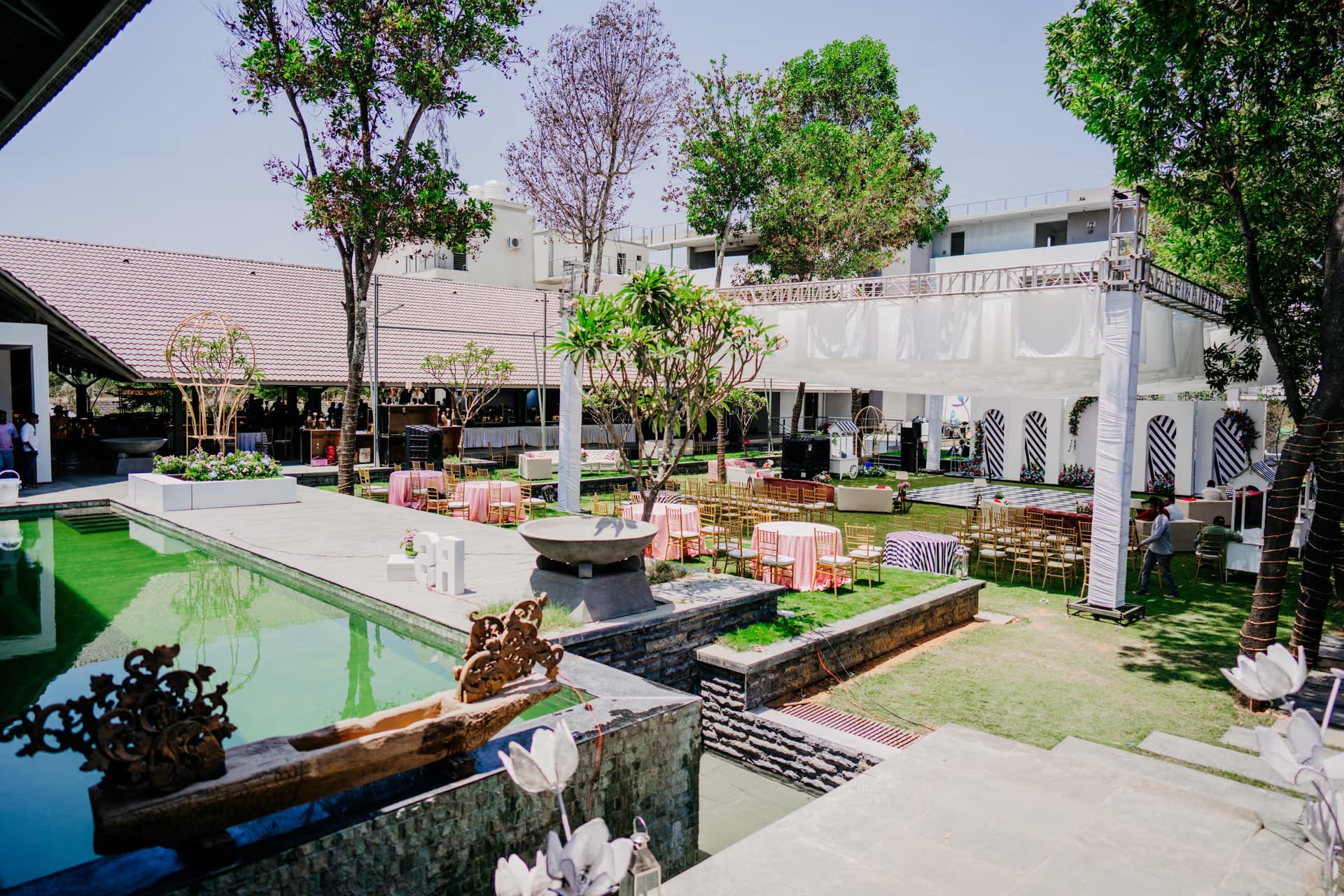
A venue like Wiwaha in Bangalore is designed with these factors in mind. Its Balinese-themed spaces include both indoor and outdoor options, parking for 200 cars, and thoughtful guest flow routes. This minimizes confusion and keeps everyone comfortable as they move through the day.
Section 3: Why Timeline Hiccups Occur and How to Avoid Them
No matter how meticulously planned, timeline hiccups happen. Common causes are:
- Underestimating setup and teardown time for vendors
- Over-scheduling activities too closely without buffers
- Late vendor arrivals or technical delays
- Weather causing outdoor event delays
- Guests arriving late or lingering in one area longer than expected
To safeguard your timeline:
- Add 10 to 15 minutes of buffer time between major events like ceremony, dinner, and speeches
- Communicate your timeline clearly with all vendors well in advance
- Have a day-of coordinator or venue team member monitor progress and adapt as needed
- Plan alternate indoor options if relying on outdoor spaces
Section 4: Best Practices for Vendor and Setup Coordination
Vendor coordination is a top logistical challenge. To get it right:
- Build a detailed vendor list with contact info, arrival times, and set-up requirements
- Confirm details and expectations multiple times before the wedding day
- Schedule vendor arrivals to prevent overlap and congestion during setup
- Use a shared planning app or timeline to help everyone stay aligned
- Trust your vendor team to handle their area but stay available for quick decisions
Frequent communication is key. Regular check-ins leading up to the wedding prevent surprises, and confirming setups weeks before helps all parties prepare properly.
Section 5: The Advantage of Single-Team Management and Venue Planning
Having a single team or venue that handles much of the planning and event flow reduces complexity. It means:
- Coordinated communication between catering, decor, parking, and event staff
- Streamlined vendor access and setup zones
- Pre-planned guest paths and transitions designed by the venue
- On-site staff ready to troubleshoot and maintain timing
A venue like Wiwaha offers this advantage through its comprehensive management and thoughtful layout. Its upcoming hotel rooms can also help with vendor stays, reducing transportation worries. This one-team approach is what many couples wish they knew they needed before booking.
FAQs
Q: What are the top logistical issues that guests complain about at weddings?
A: Guests often mention poor parking, unclear directions between zones, long waiting times, and overcrowded spaces.
Q: How far in advance should I coordinate with vendors on setup timing?
A: Start confirming details at least 4 to 6 weeks before, with final checks a week prior, and a clear timeline on the wedding day.
Q: Can timeline hiccups really be avoided?
A: Not entirely, but adding buffer times and having a coordinator on the day can handle delays smoothly.
Q: How can venues help with wedding logistics?
A: Venues designed for large events typically provide better parking, guest flow, vendor support, and backup plans, reducing stress on couples.
Q: What's the best way to communicate the wedding timeline to everyone?
A: Use shared digital tools like planning apps and printed timelines for vendors and key guests to ensure everyone is aware.
Q: Should we hire a day-of coordinator if our venue offers event management?
A: It depends, but having a dedicated coordinator who understands your vision and handles details can reduce stress even at managed venues.
Wedding Planning Checklist
- Confirm venue with attention to logistics, parking, and guest flow
- Send save-the-dates and invitations early, especially for destination weddings
- Build and maintain a detailed vendor contact list
- Schedule multiple vendor check-ins and final confirmations
- Map out guest routes and signage between zones
- Add buffer times in your event timeline
- Coordinate with venue staff on setup and transitions
- Share the final timeline with vendors, venue team, and wedding party
- Plan for weather backups if outdoor spaces are involved
- Designate someone (venue staff or coordinator) to troubleshoot on the wedding day
Conclusion
Wedding logistics can make or break your big day experience. Understanding common issues and addressing them through end-to-end planning smooths out transitions and minimizes stress. Venues like Wiwaha in Bangalore, which focus on comfort, guest movement, and unified team management, provide a practical solution to many of these challenges. If coordinating venue logistics feels overwhelming, choosing a place designed with event flow in mind can remove a lot of the chaos and let you focus on enjoying your celebration.