Table of Contents
- Introduction
- What Are Weekend-Style Weddings?
- Why Indian Couples Are Embracing Weekend Weddings
- The Role of Changing Lifestyles and Work Culture
- Weekend Weddings as Experiential Celebrations
- Popular Formats of Weekend-Style Weddings in India
- How Weekend Weddings Enhance Guest Experience
- Destination-Style Venues for Weekend Celebrations
- Planning Considerations for a Weekend-Style Wedding
- How Weekend Weddings Are Shaping the Future of Indian Celebrations
- Conclusion
Introduction
Not too long ago, an Indian wedding could feel like its own season. Invitations arrived months in advance, relatives came with trunks, and ceremonies unfolded with an easy, unhurried rhythm. The wedding was not just an event—it was the social calendar.
Across India’s major cities and emerging metros, that rhythm is changing. Couples still want depth, ritual, and emotion, but they also want a celebration that respects the realities of modern life. Instead of one rushed evening or an open-ended marathon, many are choosing a carefully designed long weekend, usually from Friday to Sunday, that feels both immersive and contained.
This is the rise of weekend-style weddings in India—a format that protects the emotional core of tradition while adapting to busy calendars, global families, and a new understanding of what celebration should feel like.
What Are Weekend-Style Weddings?
Weekend-style weddings are weddings intentionally designed around a two- or three-day window, most often a Friday-to-Sunday arc. Rather than scattering functions over several weeks, every ceremony, party, and ritual is woven into a single extended weekend journey.
In spirit, this is not entirely new. Indian weddings have always been multi-day experiences. The difference lies in curation. Weekend weddings compress the traditional sequence into a tighter, more deliberate structure: welcome, celebration, ceremony, and a gentle goodbye, all held within a common space or destination-style venue.
For many couples, especially those living in metros like Bengaluru, Mumbai, Delhi, Hyderabad, and Chennai, this approach is becoming the default grammar for “big, but balanced” weddings.
Why Indian Couples Are Embracing Weekend Weddings
Speak to couples planning weddings in 2025 and a clear theme emerges: they want real time with people they love, not just beautifully choreographed tasks on a stage. A weekend format makes that possible.
- It allows multiple ceremonies without draining everyone across endless days.
- It reduces repeated travel for guests, especially in big cities with heavy traffic.
- It makes leave planning simpler for professionals and students, who can commit to a defined block.
- It gives families a clearer structure for hospitality, logistics, and budgeting.
There is also a shift in aesthetic priorities. Modern Indian wedding trends focus less on sheer scale and more on how the celebration feels—the flow of the day, the comfort of elders, the ease with which guests can participate. A weekend layout naturally supports this, creating space for both big moments and quiet ones.
The Role of Changing Lifestyles and Work Culture
Work has changed, and weddings have followed. Dual-income households, global careers, and hybrid work models shape how much time people can step away from daily life. Taking a full week off for one wedding, let alone several in a season, is harder than it once was.
Families are also more geographically spread out. Siblings might be in different countries, cousins in different cities, elders in hometowns that require flights. In earlier decades, many guests lived within driving distance; today, itineraries must factor in airports, school schedules, and health considerations.
Weekend-style weddings acknowledge these realities. They compress the calendar without flattening the ritual. The haldi, mehendi, sangeet, wedding, and reception still happen—but they are placed thoughtfully within a finite, manageable window rather than stretched thin over time.
Weekend Weddings as Experiential Celebrations
The best weekend weddings do not feel rushed; they feel curated. Instead of a single “main event,” the entire weekend is treated like a series of chapters, each with its own mood and memory.
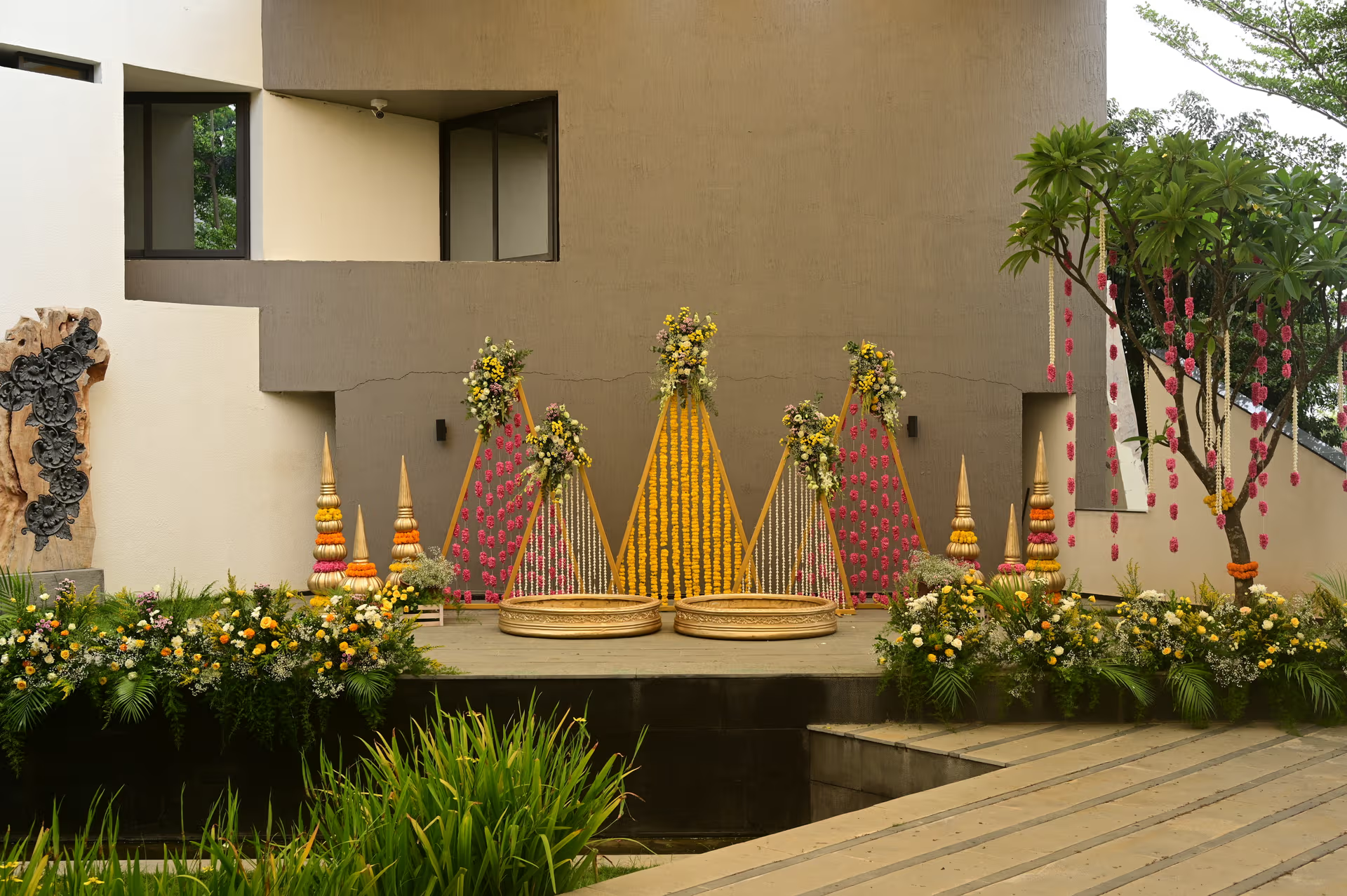
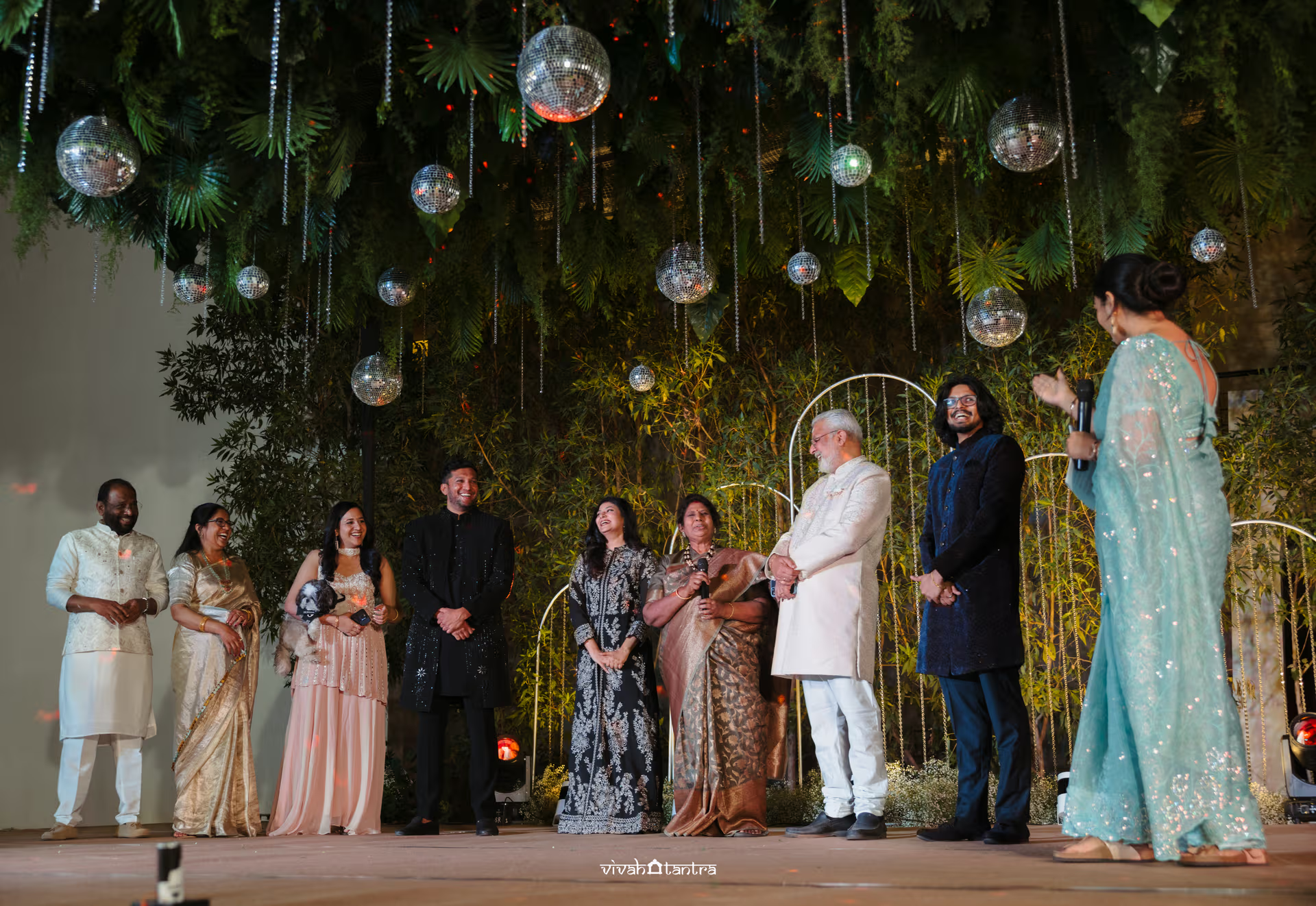
Imagine a Friday evening welcome that feels like a homecoming rather than a formal function. A Saturday daytime mehendi that doubles as a garden party with music, food, and relaxed conversation. A sangeet that feels like a performance night guests genuinely look forward to, not just another obligation. A wedding morning with enough silence and space for prayer, rituals, and family emotion. And finally, a Sunday brunch where people actually linger to say goodbye properly.
In this format, extension is not about how many days the wedding lasts; it is about depth. Guests stop being an audience and start becoming participants, sharing not only ceremonies but meals, walks, laughter, and unscripted moments.
Popular Formats of Weekend-Style Weddings in India
While every community and family adapts the idea differently, certain patterns are emerging across Indian cities.
Format 1: High-Energy Centered Around Sangeet
Friday: Check-ins and an informal welcome evening. Saturday: Morning haldi and afternoon downtime, followed by a high-energy sangeet as the emotional and visual centrepiece. Sunday: Wedding ceremony and reception, often merged into a single well-paced celebration.
Format 2: Ceremonial Heart on Saturday
Friday: Intimate family dinner or puja. Saturday: Haldi, wedding, and reception flowing into each other, with intentional breaks built in. Sunday: Relaxed brunch or lunch that allows for storytelling, photos, and final goodbyes.
The formats that work best respect guest energy. Instead of four late nights back-to-back, they alternate intensity with ease, spectacle with simplicity, movement with stillness. In that sense, weekend-style weddings are not only modern; they are deeply hospitable.
How Weekend Weddings Enhance Guest Experience
For guests, weekend-style weddings often feel less like an obligation and more like a short retreat. When most events happen within one venue or a tightly connected set of spaces, the usual stress points simply fall away.
- No repeated commuting through city traffic for every function.
- Clear, predictable schedules that make it easy to plan rest, meals, and outfits.
- More opportunities to reconnect with people across multiple touchpoints, not just hurried greetings.
- Space for children to find playmates and elders to settle into comfortable seating and routines.
For many, the wedding becomes a meaningful break from ordinary life—a pause filled with music, food, and community. This is especially true for luxury weekend weddings in India, where budgets are now being directed not just toward décor, but toward hospitality: thoughtful itineraries, seamless logistics, intuitive wayfinding, and attentive on-ground teams.
Destination-Style Venues for Weekend Celebrations
As weekend weddings grow, so does the demand for venues that can hold an entire world within their boundaries. Traditional destination weddings in Rajasthan, Goa, or the hills remain popular, but many couples now seek destination-style spaces closer to home.
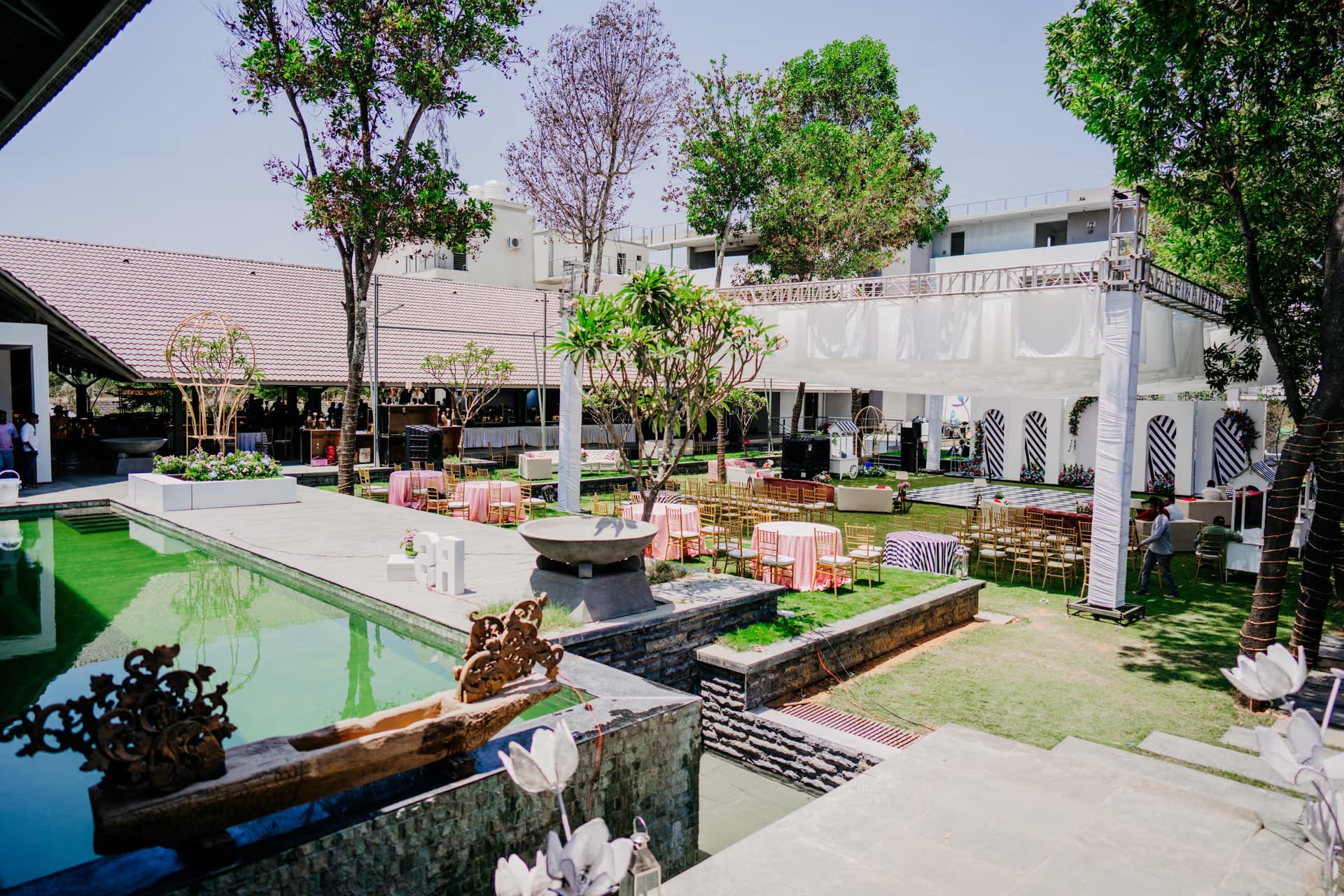
In cities like Bengaluru, North Bengaluru in particular has seen the rise of expansive properties that function like celebration campuses: multiple lawns, indoor halls, water features, landscaped pathways, and dedicated dining infrastructure. Guests arrive once, settle in, and then simply move from ambience to ambience through the weekend.
Wiwaha by Praman, located in the Bettahalsoor/Yelahanka belt of North Bengaluru, is one such example. Conceived as a purpose-built celebration venue with Balinese-inspired design, open-air layouts, gazebos, poolside and amphitheatre-style zones, and thoughtfully planned guest pathways, it supports exactly the kind of “one base, many experiences” structure that weekend weddings require.
With parking, accommodation options in development, and multiple event pockets on the same campus, venues like Wiwaha make it easier for families to host a full weekend—from welcome evening to farewell brunch—without constantly shifting geography.
Planning Considerations for a Weekend-Style Wedding
Weekend weddings may feel effortless when done well, but that ease is carefully engineered. A few core planning principles make a big difference.
1. Design the Flow, Not Just the Functions
Think in transitions: How do guests move from haldi to lunch, from sangeet to late-night snacks, from wedding ceremony to reception? The venue layout should support intuitive navigation, with clear signage, accessible routes, and natural gathering points.
2. Respect Time (and Buffers)
A weekend is generous, but not infinite. Build realistic timelines that allow rituals to breathe while still starting close to schedule. Add buffers for outfit changes, photography, and elders’ comfort so the day never feels like a race.
3. Hospitality as the Real Luxury
Weekend wedding planning in India is increasingly about smoothness rather than show. Clear communication, room allocations, transport coordination, and a well-paced food plan (with light, thoughtful menus between heavier meals) determine whether guests feel held or hurried.
4. A Producer’s Mindset
Treat the weekend like a narrative. Someone—a planner, a family coordinator, or a venue team like the one at Wiwaha—should hold the big picture, keep vendors aligned, and ensure that every scene connects to the next. When this happens, the wedding feels less like scattered programs and more like one coherent story.
How Weekend Weddings Are Shaping the Future of Indian Celebrations
Looking at Indian wedding trends for 2025 and 2026, weekend-style formats feel less like a passing fad and more like an evolution. The Indian wedding has always been adaptable, absorbing influences from every era—from film music to Instagram, from designer lehengas to digital invitations.
Weekend weddings are another such adaptation, shaped by dual careers, global families, wellness-conscious guests, and a preference for experiences over pure display. Even communities known for long, elaborate celebrations are experimenting with smarter structures: consolidating functions, reducing repetition, and investing energy where it matters most.
Interestingly, this shift is also quietly inclusive. Clearer schedules and simpler travel make it easier for more guests to attend and stay comfortable—from elderly relatives to friends flying in for a short window.
Conclusion
Weekend-style weddings in India are not a rejection of tradition; they are a rebalancing. They preserve what Indian weddings have always done best—bring families and friends together for shared rituals, meals, and memories—while placing those experiences inside a frame that modern life can hold.
For couples, the promise is simple: more presence, less exhaustion. For guests, it is a rare, beautiful pause that feels like a small world of its own. And for venues like Wiwaha, built to support immersive, multi-day celebrations, weekend-style weddings are an opportunity to create celebrations that feel both contemporary and timeless.