Table of Contents
- Introduction
- Section 1: Coordinating Sangeet, Mehendi, and Wedding Ceremonies Seamlessly
- Section 2: Understanding Venue Logistics for Multi-Day Weddings
- Section 3: Managing Guest Comfort and Reducing Multi-Day Fatigue
- Section 4: Benefits of Hosting All Events at One Venue
- Section 5: How Wiwaha's Design Supports Complex Multi-Day Weddings
- FAQs
- Wedding Planning Checklist
- Conclusion
Introduction
Multi-day weddings have become a norm in Indian celebrations, especially in Bangalore, where extended itineraries commonly include mehendi, sangeet, haldi, the main wedding ceremony, and a reception spread over three to four days.[web:94][web:95] While these layered celebrations create unforgettable memories, they also increase the complexity of planning and coordination. Choosing the right venue and organizing events thoughtfully are key to keeping things smooth and enjoyable for everyone involved.[web:94][web:96]
Section 1: Coordinating Sangeet, Mehendi, and Wedding Ceremonies Seamlessly
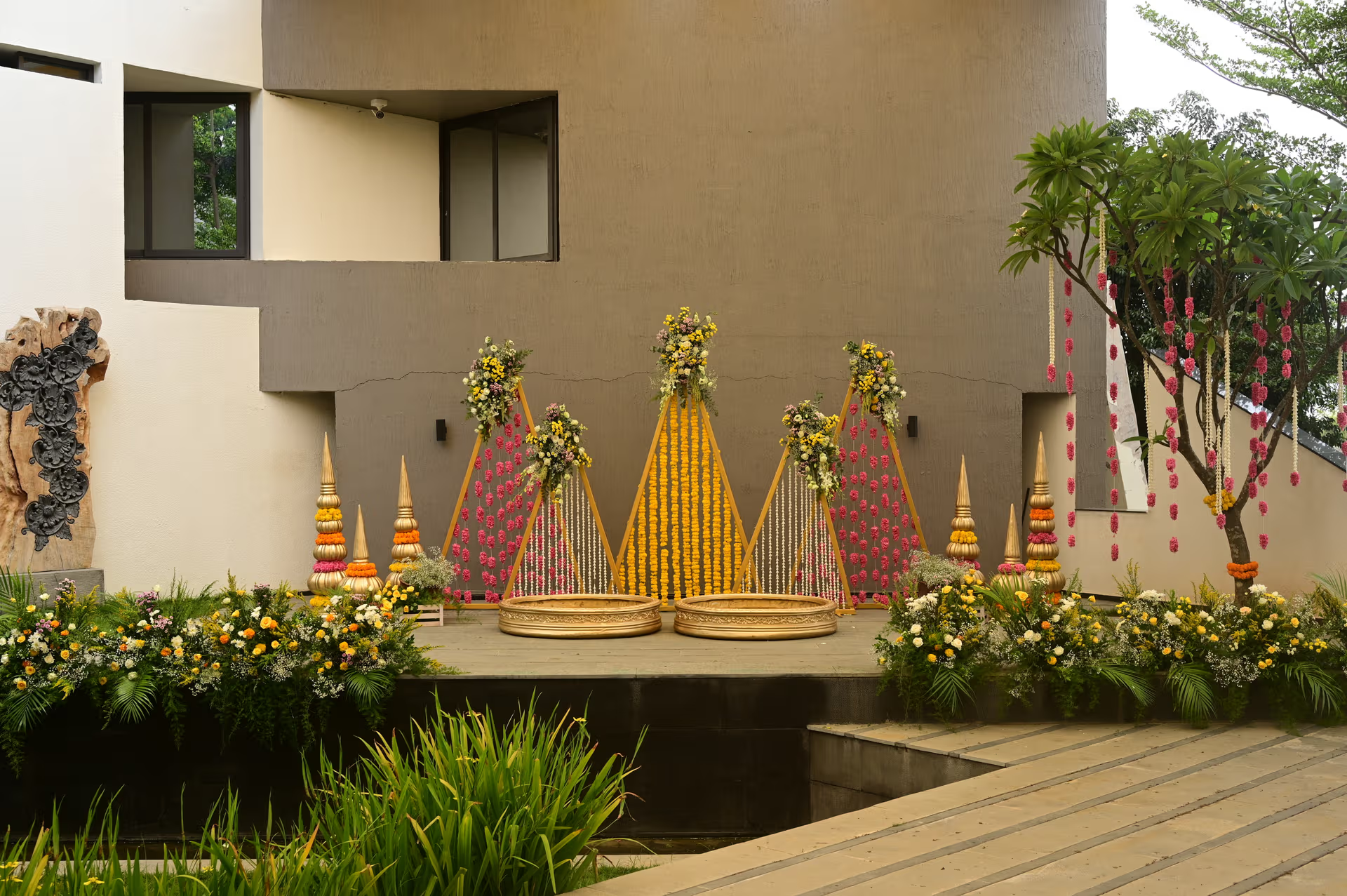
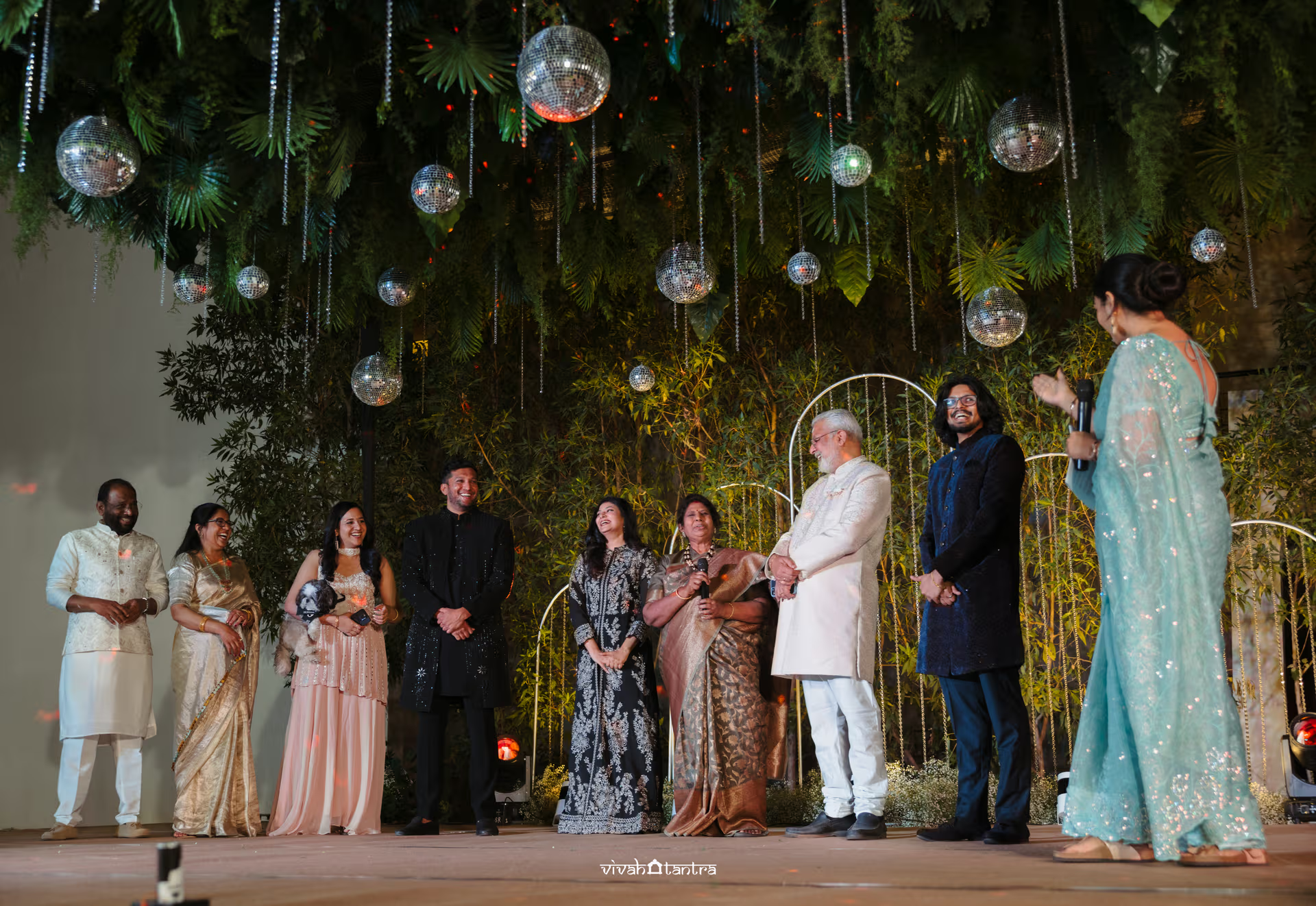
Indian weddings often feature multiple events with distinct moods—from the vibrant mehendi and intimate haldi to the high-energy sangeet and formal wedding rituals. Planners in Bangalore recommend mapping these as one integrated project rather than isolated functions to avoid clashes and delays.[web:94][web:97][web:103]
- Develop a master schedule that includes event timings, vendor arrivals, sound checks, and setup/teardown windows for each day.[web:94][web:101]
- Select vendors with multi-day wedding experience so they can anticipate turnaround times, rehearsal needs, and space constraints across events.[web:97][web:99][web:103]
- Design decor and themes that evolve over days—reusing base structures and lighting while refreshing colors and floral accents for each function to speed transitions.[web:94][web:95][web:96]
- Centralize communication through a single coordinator or planning team so vendors, families, and the venue always reference one updated plan.[web:94][web:97][web:103]
Section 2: Understanding Venue Logistics for Multi-Day Weddings
Venue logistics matter even more when the same space must handle consecutive events, late-night resets, and storage between days. Bangalore’s resort-style wedding venues increasingly market themselves as all-in-one hubs precisely because they offer this operational flexibility.[web:94][web:95][web:96]
- Prioritize venues with multiple celebration zones or configurable halls and lawns so different events can run back-to-back without feeling cramped.[web:43][web:94]
- Look for indoor and outdoor options to handle Bangalore’s occasional showers while still offering varied atmospheres across days.[web:95][web:96]
- Check parking capacity and guest-flow routes, as staggered arrivals and departures over several days still tend to peak around core functions.[web:94][web:59]
- Confirm back-of-house facilities such as loading access, storage rooms for decor, and reliable kitchen support for caterers, which are crucial during quick overnight flips.[web:43][web:84][web:93]
Section 3: Managing Guest Comfort and Reducing Multi-Day Fatigue
Indian weddings are often described as marathons rather than sprints, and recent coverage of “wedding wellness” trends highlights how multi-day celebrations can leave guests and families exhausted.[web:98][web:100][web:102] Proactively planning for comfort helps everyone enjoy the experience instead of just enduring it.
- Build natural downtime into itineraries with lighter mornings or free afternoons between heavy functions so guests can rest or explore the city.[web:94][web:101]
- Create shaded seating clusters and quiet lounge zones away from the main stage where older guests and children can relax.[web:84][web:92]
- Offer hydration stations, light snacks, and easy access to refreshments; some luxury weddings now add wellness corners with massage chairs or medically supervised IV hydration to fight “wedding fatigue”.[web:98][web:100][web:102]
- Whenever possible, arrange on-site or nearby accommodation so guests are not commuting long distances through Bangalore traffic between functions.[web:94][web:95][web:96]
Section 4: Benefits of Hosting All Events at One Venue
Hosting all events at a single venue has become a popular approach for destination-style weddings in and around Bangalore because it dramatically simplifies coordination.[web:43][web:94][web:101]
- Vendors work within one layout, reducing travel time, transport costs, and setup delays between different venues.[web:94][web:96]
- Decor elements, lighting rigs, and staging can be reconfigured instead of rebuilt, which saves budget while maintaining evolving looks across days.[web:94][web:96]
- Guests quickly learn where key spaces, restrooms, and dining areas are, making them more self-sufficient and relaxed.[web:95][web:96]
- Transport hassles for elders and children reduce sharply when ceremonies, parties, and meals all happen in one destination-style property.[web:94][web:101]
- Venue teams can deliver consistent hospitality across all days, developing familiarity with family preferences and responding faster to needs.[web:43][web:94]
Section 5: How Wiwaha's Design Supports Complex Multi-Day Weddings
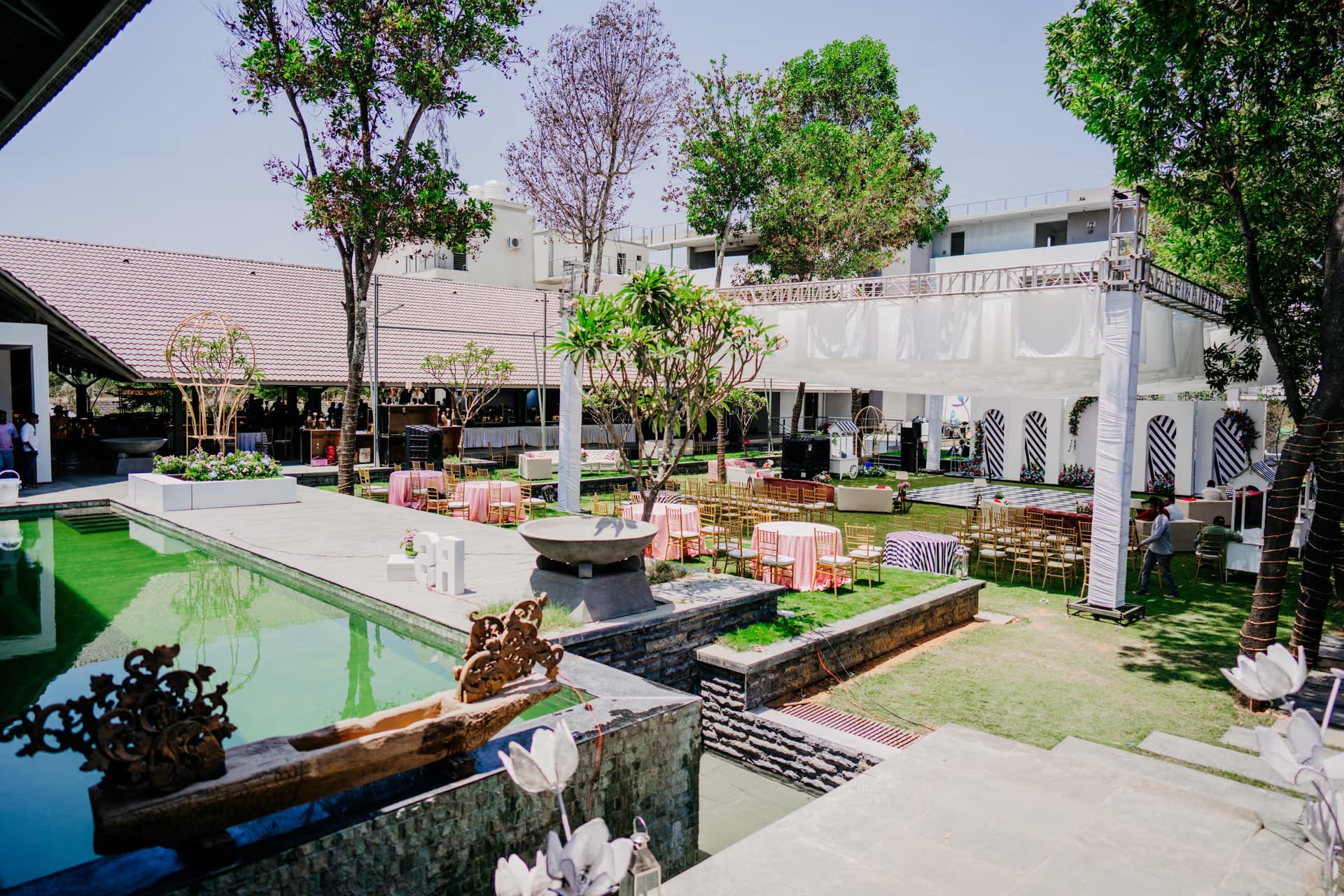
Wiwaha by Praman in Bangalore exemplifies the resort-style venues now favoured for multi-day Indian weddings. It offers a combined indoor banquet and outdoor lawn with approximately 1000 seating and 1500 floating guest capacity, catering well to large sangeets, pheras, and receptions on the same property.[web:2][web:3][web:4]
Across major listings, Wiwaha is credited with around 30–32 air-conditioned rooms currently in use and broader claims of up to 65 rooms including bridal suites, along with structured parking for roughly 170–250 vehicles and valet support.[web:1][web:2][web:3][web:11] The two-acre Balinese-inspired layout creates multiple celebration pockets within one venue, allowing mehendi by the lawn, sangeet by the pool or amphitheatre, and indoor pheras without moving guests far. A single in-house coordination team, flexible catering policies, and both indoor and outdoor spaces help couples stage complex, multi-day event series with fewer moving parts.[web:2][web:3][web:4]
FAQs
Q1: How can I make sure sangeet, mehendi, and wedding ceremonies do not overlap or feel disconnected?
A1: Create a single master timeline that covers all events and schedule buffer time between functions for resets. Using one venue with multiple zones and appointing an overall event manager helps maintain continuity and a cohesive story across days.[web:94][web:97][web:103]
Q2: What special venue logistics should I consider for a multi-day event in Bangalore?
A2: Prioritise venues with multiple configurable spaces, strong back-of-house areas, ample parking, and indoor–outdoor flexibility to handle weather. Also confirm storage space for decor and whether late-night turnovers are allowed in between functions.[web:84][web:94][web:96]
Q3: How can I help guests avoid exhaustion during multi-day weddings?
A3: Add rest windows into the itinerary, keep seating and lounges easily accessible, provide hydration and light snacks, and opt for on-site or nearby accommodations to cut down on commute fatigue. Wellness lounges or light spa services are increasingly used at high-end weddings for this purpose.[web:98][web:100][web:102]
Q4: What are the advantages of choosing one venue for all wedding events?
A4: A single venue reduces transport costs, simplifies vendor logistics, allows decor and infrastructure reuse, and offers guests a familiar environment, which is especially helpful for elders and children.[web:43][web:94][web:101]
Q5: How does Wiwaha facilitate stress-free multi-day wedding coordination?
A5: Wiwaha brings together a hall-and-lawn setup for up to about 1500 floating guests, dozens of on-site rooms, significant parking, and flexible policies for catering and decor, all overseen by a single venue team used to handling large-format events.[web:2][web:3][web:4][web:11]
Wedding Planning Checklist
- List all major events (mehendi, sangeet, haldi, wedding, reception) and estimate guest counts for each day.[web:94][web:81]
- Shortlist venues in and around Bangalore that offer multiple event zones, indoor–outdoor flexibility, and strong logistics support.[web:94][web:95][web:96]
- Hire a single experienced planner or coordination team for all functions to centralise communication.[web:97][web:99][web:103]
- Create a detailed master schedule including setup/teardown times, vendor slots, and buffer periods.[web:94][web:101]
- Arrange on-site or nearby hotel blocks and transport plans for out-of-town guests.[web:94][web:95]
- Plan comfort amenities like lounges, hydration points, and shaded seating to minimise fatigue.[web:84][web:92][web:102]
- Contract vendors with proven multi-day wedding experience and lock in responsibilities for each function.[web:94][web:97]
- Coordinate decor and themes so structures can be reused while each event still feels distinct.[web:94][web:95][web:96]
- Confirm venue parking capacity, guest-flow routes, and any valet or shuttle services required.[web:11][web:84]
- Schedule intentional downtime for both guests and the core family to reset between key events.[web:94][web:102]
Conclusion
Planning a multi-day Indian wedding in Bangalore can feel overwhelming, but focusing on guest flow, logistics, and wellness turns a demanding schedule into a joyful, manageable journey.[web:85][web:90][web:93] Choosing venues and partners equipped for large-format, multi-event celebrations ensures fewer surprises and more time to be present in the moments that matter.
Venues like Wiwaha—combining a hall-and-lawn setup for up to around 1500 floating guests, on-site rooms, significant parking, and experienced coordination teams—show how thoughtful design can simplify even the most complex wedding itineraries.[web:2][web:3][web:4][web:11] If venue logistics have been stressing you out, prioritising spaces built around comfort, flow, and multi-day management can transform your wedding planning into a genuinely enjoyable experience.