Table of Contents
- Introduction
- Planning Logistics for Large Indian Weddings
- Tips for Keeping Large Wedding Guest Lists Comfortable and Engaged
- Choosing Spaces that Support Event Flow
- Effective Communication and Coordination Among the Wedding Crew
- Why High-Capacity Venues Matter
- FAQs
- Wedding Planning Checklist
- Conclusion
Introduction
Large Indian weddings are joyous but complex events. Managing hundreds or even thousands of guests means careful planning around guest flow, comfort, and coordination, especially as multi-function, multi-day celebrations remain a major trend in India’s expanding wedding industry.[web:85][web:91][web:92] Without thoughtful arrangements, logistics can quickly overwhelm both the couple and their guests. This blog breaks down how to manage large Indian weddings effectively, including tips on guest comfort, space planning, and communication. It also highlights how high-capacity, guest-focused venues like Wiwaha in Bangalore support these needs through design and professional coordination.[web:2][web:3][web:4][web:11]
Planning Logistics for Large Indian Weddings
For large guest counts, logistics become the backbone of a smooth event. Core elements include guest arrival routes, parking layout, accommodation, internal movement, and vendor timing, which all need to be mapped like a floor plan for an Indian marriage hall.[web:84][web:90][web:93]
Travel and accommodation planning are especially important when many guests are flying in or driving from other cities. Coordinating airport pickups, hotel check-ins, and shuttle schedules reduces confusion and late arrivals. At the same time, aligning caterers, decorators, photographers, and technical teams to a single run sheet keeps ceremonies, meals, and performances on schedule.[web:84][web:88][web:92]
Given the scale and rising expectations in India’s wedding market, many couples now work with planners experienced in 400+ guest events who can anticipate issues with seating charts, vendor overlaps, and multi-day logistics before they occur.[web:82][web:85][web:91]
Tips for Keeping Large Wedding Guest Lists Comfortable and Engaged
Comfort and engagement hinge on how guests are seated, entertained, and guided through the celebration. Poorly planned seating or limited activity zones often leads to crowding and fatigue at grand Indian receptions.[web:81][web:82][web:92]
Clustered or round-table seating helps conversations flow better than long, rigid rows, while mixing family, friends, and age groups thoughtfully keeps energy balanced.[web:81][web:82] Distributing entertainment—live music, photo booths, kids’ corners, and quiet lounges—across the venue ensures guests are not all pulled to a single high-traffic spot. Amenities such as shaded rest areas, accessible restrooms, hydration stations, and clear signage to key zones significantly improve comfort at scale.[web:84][web:90][web:92]
Choosing Spaces that Support Event Flow
Event flow depends heavily on layout and zoning. Well-designed Indian wedding halls separate entry, seating, dining, and backstage functions into clear zones so rituals and food service can happen simultaneously without clashing.[web:84][web:90]
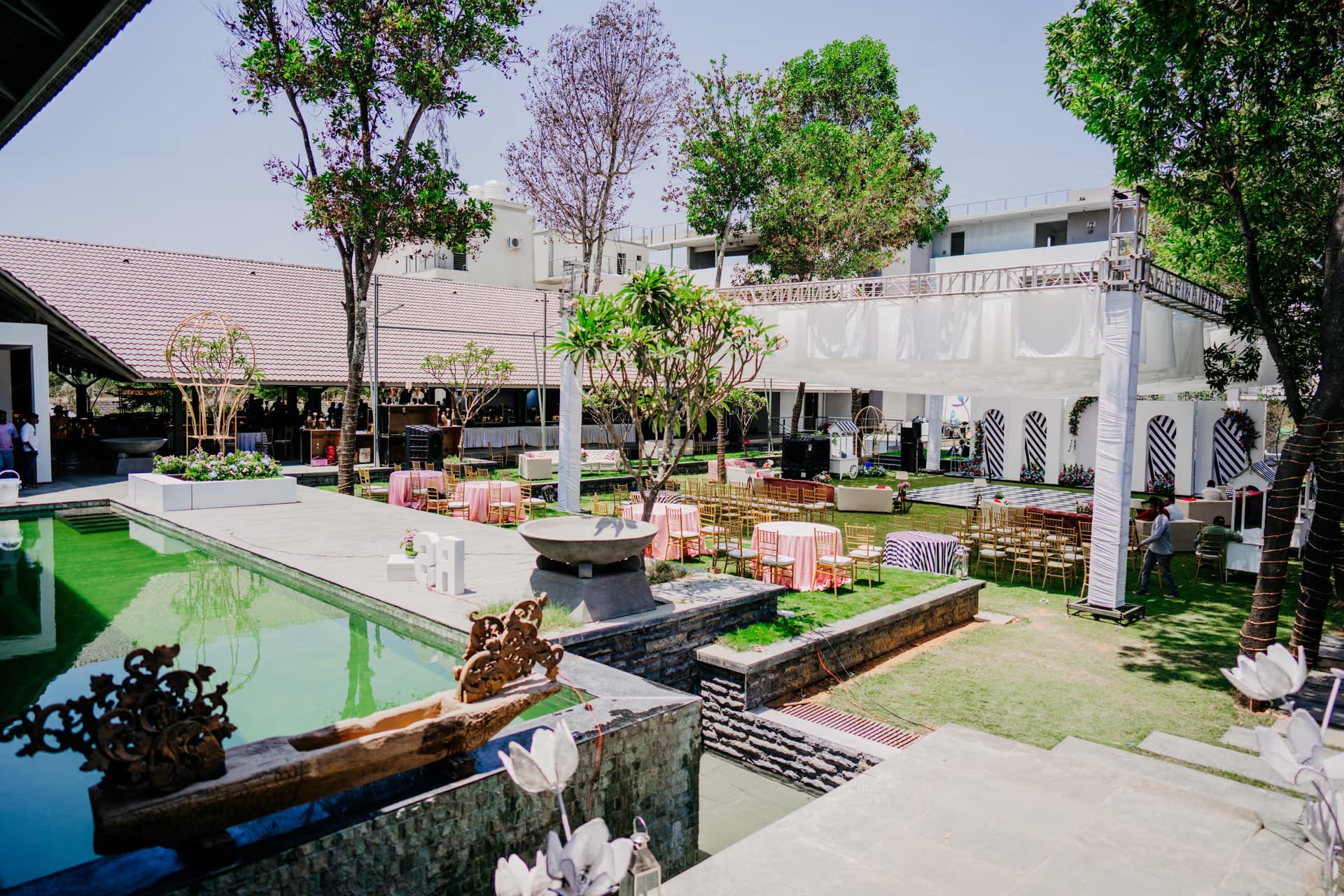
Multiple buffet or live-counter stations placed around the venue reduce queues and keep guests circulating instead of lining up in one long line.[web:84][web:92] Entrances, photo backdrops, and bars need additional space because guests naturally gather there; planning extra circulation room and separate pathways for service staff avoids congestion. Venues that blend indoor halls with lawns or courtyards let guests spread out, step outside between segments, and move comfortably during peak transition times.[web:80][web:84][web:90]
Effective Communication and Coordination Among the Wedding Crew
Behind any smooth large wedding is a crew working in sync—planners, venue managers, catering teams, decor staff, and technical crews all need shared timelines and instant communication.[web:82][web:88][web:92]
Pre-event briefings that walk through the layout and schedule, plus on-the-day tools like walkie-talkies and coordinated WhatsApp groups, help teams respond quickly to timing shifts or guest needs.[web:80][web:84] Assigning clear roles—such as one person to manage baraat, another for stage cues, and another for guest seating—prevents overlap and miscommunication. Choosing venues that routinely host 300–1500 guest events and provide in-house coordination significantly eases this orchestration.[web:3][web:4][web:93]
Why High-Capacity Venues Matter
High-capacity venues built specifically for Indian weddings minimise many common pressure points. They offer sufficient square footage for stage, seating, dining, green rooms, and parking, which marriage-hall design guides highlight as essential for large functions.[web:84][web:88][web:93]
Wiwaha by Praman in Bangalore is one such venue: listings describe an indoor hall plus outdoor lawn with around 1000 seating and 1500 floating guest capacity, roughly 30–32 on-site rooms and separate bridal suites, and parking indicated between about 170–250 vehicles with valet support on some platforms.[web:2][web:3][web:4][web:11] This combination of capacity, accommodation, and organised parking on a single two-acre property helps families host grand events without resorting to multiple scattered venues, reducing transfers and complexity for guests and vendors alike.[web:1][web:3][web:88]
FAQs
Q: How do you handle parking for a large wedding?
A: Estimate total vehicles, secure on-site or nearby lots with space for at least 70%–80% of expected cars and two-wheelers, and use attendants, valet, or shuttles plus clear route signage to keep arrivals smooth.[web:84][web:86][web:90]
Q: What's the best way to keep a large guest list engaged?
A: Mix structured moments—performances, games, special entries—with unstructured zones like lounges, kids’ areas, and photo corners, and spread activities across the venue so guests can choose how to participate.[web:81][web:82][web:92]
Q: How can wedding crews avoid miscommunication?
A: Create a master timeline, assign area-wise leads, run a full-team briefing before events begin, and rely on shared communication channels for real-time updates instead of ad hoc calls.[web:80][web:84][web:92]
Q: What indoor/outdoor balance works best for guest flow?
A: A combined hall-and-lawn setup works well, with rituals often indoors or under covered areas and receptions or sangeet spilling into lawns, giving guests room to move and step away while staying close to the action.[web:3][web:4][web:93]
Q: Why is a professional wedding coordinator important for large events?
A: Large Indian weddings involve many parallel tasks; coordinators or experienced planning teams connect all vendors, keep the timeline realistic, and shield families from on-day troubleshooting.[web:82][web:88][web:91]
Wedding Planning Checklist
- Finalize a realistic guest count per function and map seating, dining, and circulation needs accordingly.[web:82][web:84]
- Coordinate transport and accommodation plans for out-of-town guests, including room blocks and shuttle timings.[web:88][web:90]
- Choose a high-capacity venue whose hall and lawn layouts suit your largest event (e.g., 800–1500 floating guests).[web:3][web:4][web:88]
- Plan multiple food and beverage stations to avoid long queues and crowding.[web:84][web:92]
- Design comfortable seating clusters and lounge areas that encourage conversation and movement.
- Schedule varied entertainment suitable for different age groups and spread it across zones.[web:81][web:92]
- Install clear directional signage for entry, exits, dining, restrooms, and key function spaces.[web:84][web:90]
- Confirm on-site parking capacity, traffic flow, and any valet or shuttle arrangements.[web:84][web:11]
- Hire an experienced planner or coordinator familiar with large Indian weddings.[web:82][web:88]
- Set up communication tools (group chats, radios) and run crew briefings before each major function.[web:80][web:84]
- Create weather, timing, and backup plans for key moments such as pheras, baraat, and main reception.[web:84][web:88]
Conclusion
Large Indian weddings demand careful attention to layout, guest comfort, timing, and team coordination, especially as celebrations grow more ambitious in scale and design.[web:85][web:90][web:93] When these elements are planned intentionally, even very big weddings can feel smooth and welcoming rather than chaotic.
High-capacity venues such as Wiwaha in Bangalore—offering a combined hall and lawn for up to about 1500 floating guests, on-site rooms, and structured parking—show how design and operations can work together to simplify complexity for hosts and guests alike.[web:2][web:3][web:4][web:11] If venue logistics feel overwhelming, prioritizing properties built around guest flow, comfort, and professional coordination can take much of the pressure off and let you focus on celebrating.