Table of Contents
- Introduction
- How Many Rooms Should You Reserve for Wedding Guests?
- Essential Hospitality Services for Wedding Guest Comfort
- Common Pitfalls in Wedding Guest Accommodation
- How the Right Venue Simplifies Guest Logistics
- Why On-Site Accommodation Makes a Difference
- FAQs
- Wedding Planning Checklist
- Conclusion
Introduction
Figuring out guest accommodation can feel like a puzzle when planning a wedding. From reserving the right number of rooms to ensuring guests feel cared for and logistics run smoothly, it's a crucial part of the celebration. In 2025, with an increasing number of luxury weddings happening in city venues, the advantage of having ample on-site guest accommodation is clearer than ever. This post breaks down key questions about room blocks, hospitality essentials, common challenges, and how the right venue setup can make everything much easier.
How Many Rooms Should You Reserve for Wedding Guests?
The number of rooms you reserve depends largely on your guest list and where most guests are traveling from. Here are some ways to estimate:
- Core Guests: Reserve rooms for immediate family, close friends, and out-of-town guests who don't have local accommodation options.
- Group by Travel Distance: Guests traveling over 50 miles are more likely to need a hotel room.
- Consider Couples and Families: Many rooms may be shared by two or more people, especially families.
- Communicate Early: Send a quick survey or poll with the invitation to gauge accommodation needs.
To avoid surprises, it's wise to block more rooms than you think you'll need, especially if your wedding falls on a busy weekend or coincides with local events. Wedding room blocks often come with discounted rates, but you'll want to confirm the cancellation policy and cutoff dates.
Essential Hospitality Services for Wedding Guest Comfort
Great hospitality goes beyond just putting guests up for the night. Here are essential services often overlooked that help keep guests comfortable and make the experience enjoyable:
- Convenient Check-In/Out: A smooth and flexible check-in makes a big difference for guests arriving at different times.
- Information Packs: Welcome kits with venue maps, transport info, meal timings, and event schedules keep guests informed.
- Food and Beverage Options: Some venues offer dining on-site, or readily accessible options, so guests don't need to go far.
- Transport Assistance: Shuttle services or guidance on local taxis ease travel between accommodations and event spaces.
- Special Requests: Dietary needs, accessibility, and child care requests should be managed proactively.
- On-Site Amenities: Spaces for relaxation like lounges or outdoor seating enhance guest comfort during downtime.
Common Pitfalls in Wedding Guest Accommodation
Even with the best plans, accommodation often faces common challenges. Knowing these helps avoid headaches:
- Last-Minute Guest Changes: Guest lists can fluctuate, so having some flexibility in room blocks is important.
- Lack of Contingency Plans: Transportation mishaps or late arrivals require backup solutions.
- Miscommunication: Incomplete information about venue location, room details, or event timing frustrates guests.
- Overlooking Comfort: Poor ventilation, inconvenient room layouts, or limited parking can sour the experience.
- Underestimating Parking and Traffic: Without ample parking or traffic flow planning, guests can get delayed and stressed.
How the Right Venue Simplifies Guest Logistics
Choosing a venue that integrates guest accommodation with event spaces can simplify logistics massively. A place designed around flow and comfort removes many touchpoints of stress. Here's how:
- On-Site Rooms: Guests stay where events happen, so there's no travel hassle or risk of being late.
- Large Parking Facilities: On-site parking for hundreds of cars eases arrival and exit during peak times.
- Indoor and Outdoor Options: Guests move freely between ceremony, reception, and rest without needing vehicles.
- Centralized Hospitality: Services like check-in desks, concierge, and food outlets all within one property.
- Better Guest Experience: Coordinated schedules and easy access accommodate different guest preferences.
- Personalized Touches: A venue that can customize guest experiences ensures everyone feels welcomed.
Why On-Site Accommodation Makes a Difference
The impact of on-site accommodation is clear from multiple wedding forums and 2025 planning insights. Couples report less stress and fewer logistic concerns when guests don't have to shuttle between multiple locations. This is especially helpful for luxury weddings that tend to have multi-day events and out-of-town guests.
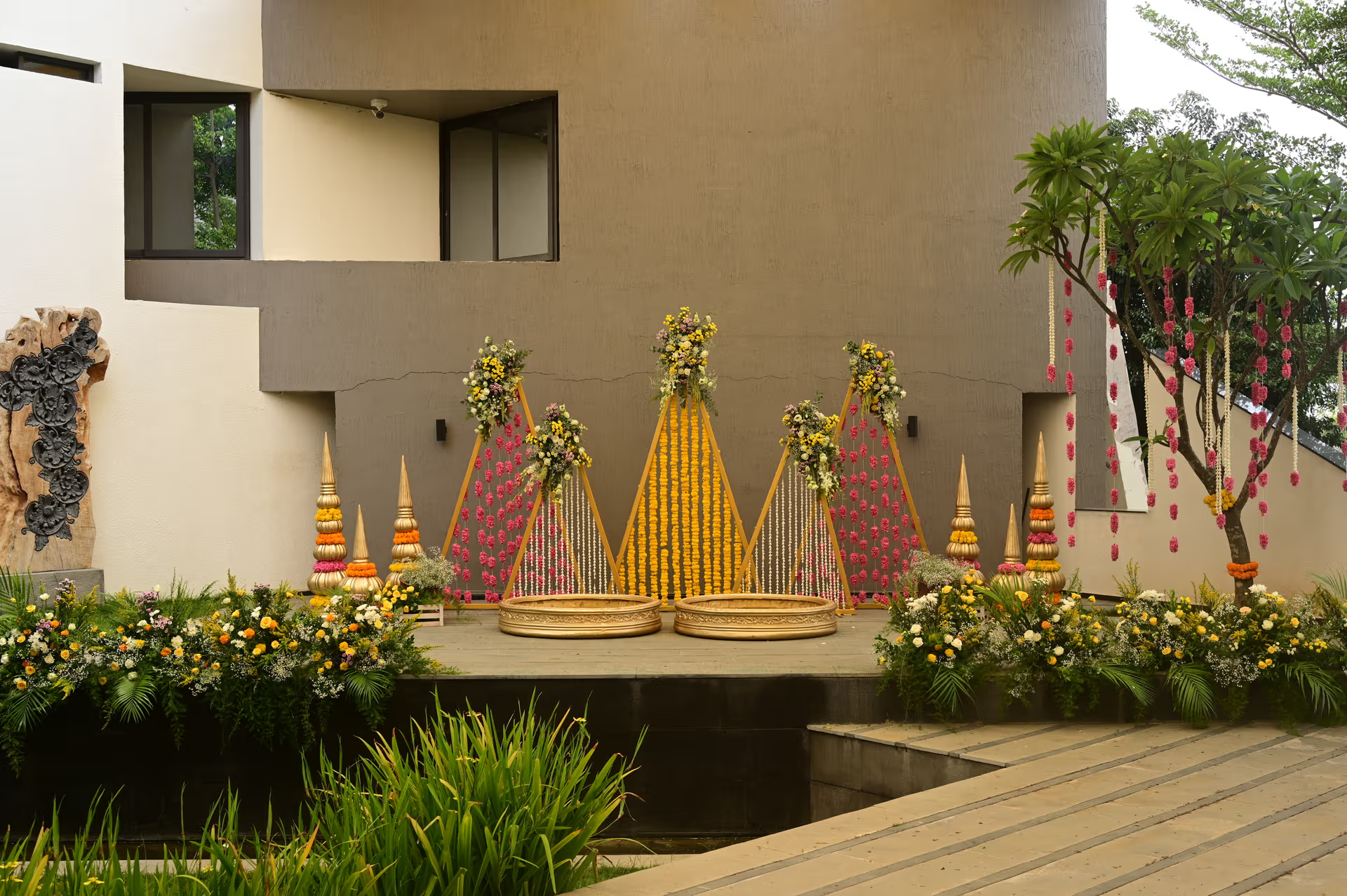
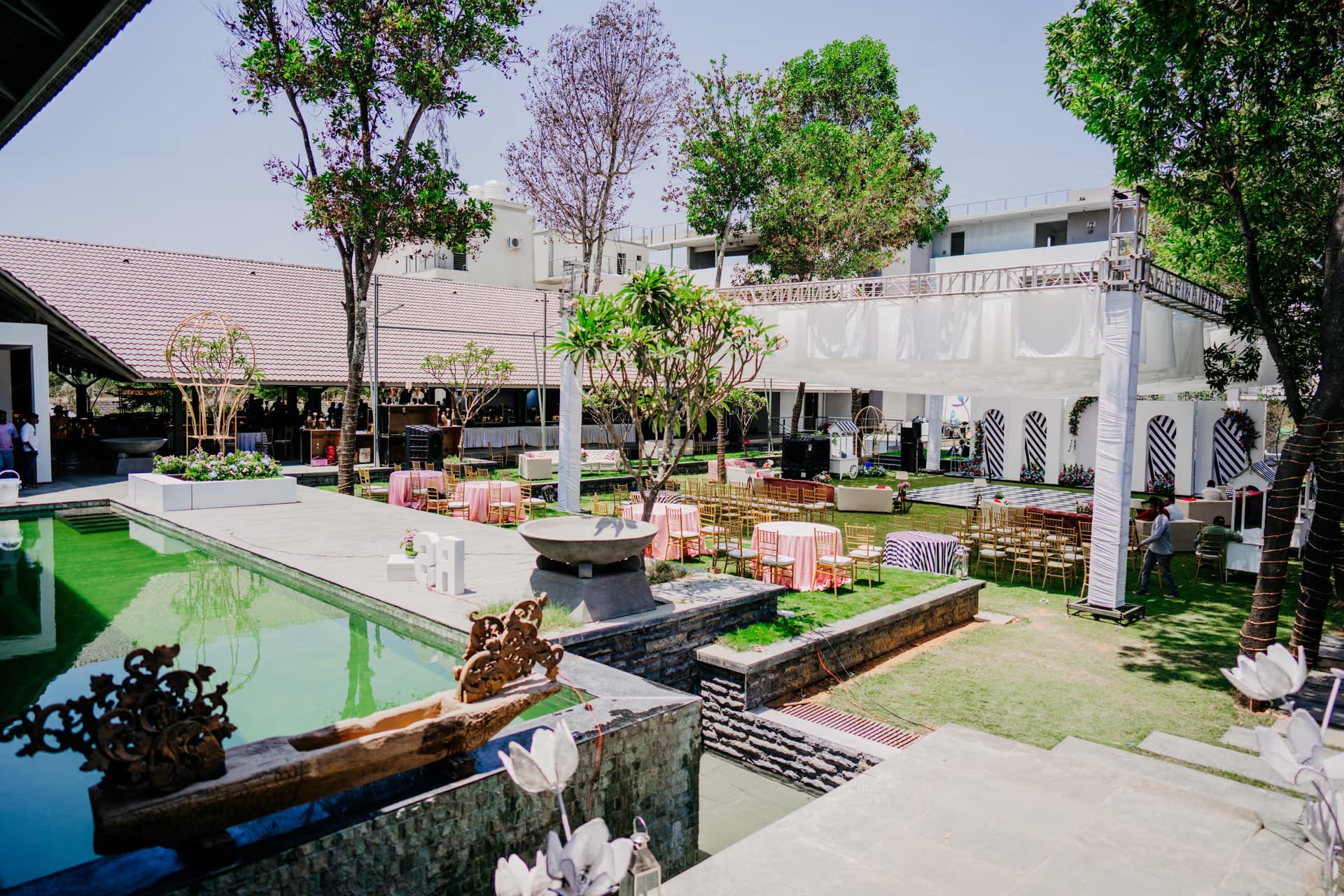
Wiwaha by Praman, a Balinese-inspired city venue in Bangalore, highlights this advantage well. With a sprawling two-acre setting designed for comfort and ease of guest movement, Wiwaha offers both indoor and outdoor areas, large parking for 200 cars, and upcoming plans for 40 rooms right at the venue. This hybrid setup lets couples host elaborate celebrations without worrying about guest room availability or transport logistics. Warm hospitality and personalized service add to the subtle luxury experience that makes everyone's stay hassle-free.
FAQs
How far in advance should I book wedding room blocks?
Booking room blocks at least 6 to 12 months ahead is advisable, especially for popular wedding dates, to ensure availability and better rates.
What are common hospitality services that guests expect at luxury weddings?
Guests typically look for transportation options, welcome kits, flexible dining hours, easy check-in/out, and assistance with special requests.
How do I handle unexpected increases or decreases in guest room needs?
Choose venues or hotels with flexible cancellation policies for room blocks and consider keeping some rooms unblocked but easily bookable nearby.
What are the logistics benefits of venues with on-site accommodations?
On-site accommodations reduce travel complications, improve guest comfort by centralizing events, and streamline service management for organizers.
How many parking spots should a luxury wedding venue ideally provide?
A venue that offers parking for at least 70%-80% of expected vehicles is ideal, plus some extra for staff and suppliers.
Wedding Planning Checklist
- Survey guests early about accommodation needs
- Reserve a block of rooms at recommended hotels or venue
- Confirm cancellation and cutoff policies for room blocks
- Arrange clear transport options for guests
- Prepare welcome kits with all essential info
- Communicate accommodation details clearly with invitation
- Work with venue on parking and traffic flow plans
- Build contingency plans for last-minute changes
- Arrange for guest support contacts at venue and hotels
- Monitor guest feedback and address issues promptly during the event
Conclusion
Wedding guest accommodation planning doesn't have to be stressful when you understand the needs and common pitfalls. Reserving the right number of rooms, ensuring essential hospitality, and choosing a venue designed to handle guest logistics all contribute to a smooth celebration. Venues like Wiwaha in Bangalore that combine luxury event spaces with ample on-site accommodation and parking simplify planning by removing much of the back-and-forth for guests and hosts alike. If figuring out venue logistics feels overwhelming, exploring options that prioritize comfort and flow can take a lot of pressure off your big day.