Table of Contents
- Introduction
- Making Your Wedding Reflect Your Story
- Design Choices That Impact Guest Experience
- Balancing Aesthetics with Comfort and Practicality
- Venue Support Needed for Personalized Weddings
- Why Flexible Venue Spaces Matter
- FAQs
- Wedding Planning Checklist
- Conclusion
Introduction
Lots of couples want their wedding to feel truly personal yet worry it could get too complicated or uncomfortable for guests. Striking a good balance between personalization and practicality is key. The goal is a day that reflects your story and style but also flows well and is enjoyable for everyone. In 2025, trends like immersive decor, multi-sensory experiences, and statement florals make personalization easier than ever, but they work best when anchored in comfort and smart planning.[web:36][web:40][web:48]
Making Your Wedding Reflect Your Story
Your wedding should be about you as a couple, not just current trends. Start with your shared story—where you met, what you love doing together, family traditions, or places that matter—and translate those into colors, motifs, and small details guests can spot throughout the day. This could mean naming tables after meaningful locations, using flowers from your proposal spot, or including cultural rituals that have shaped your relationship.[web:37][web:44][web:46]
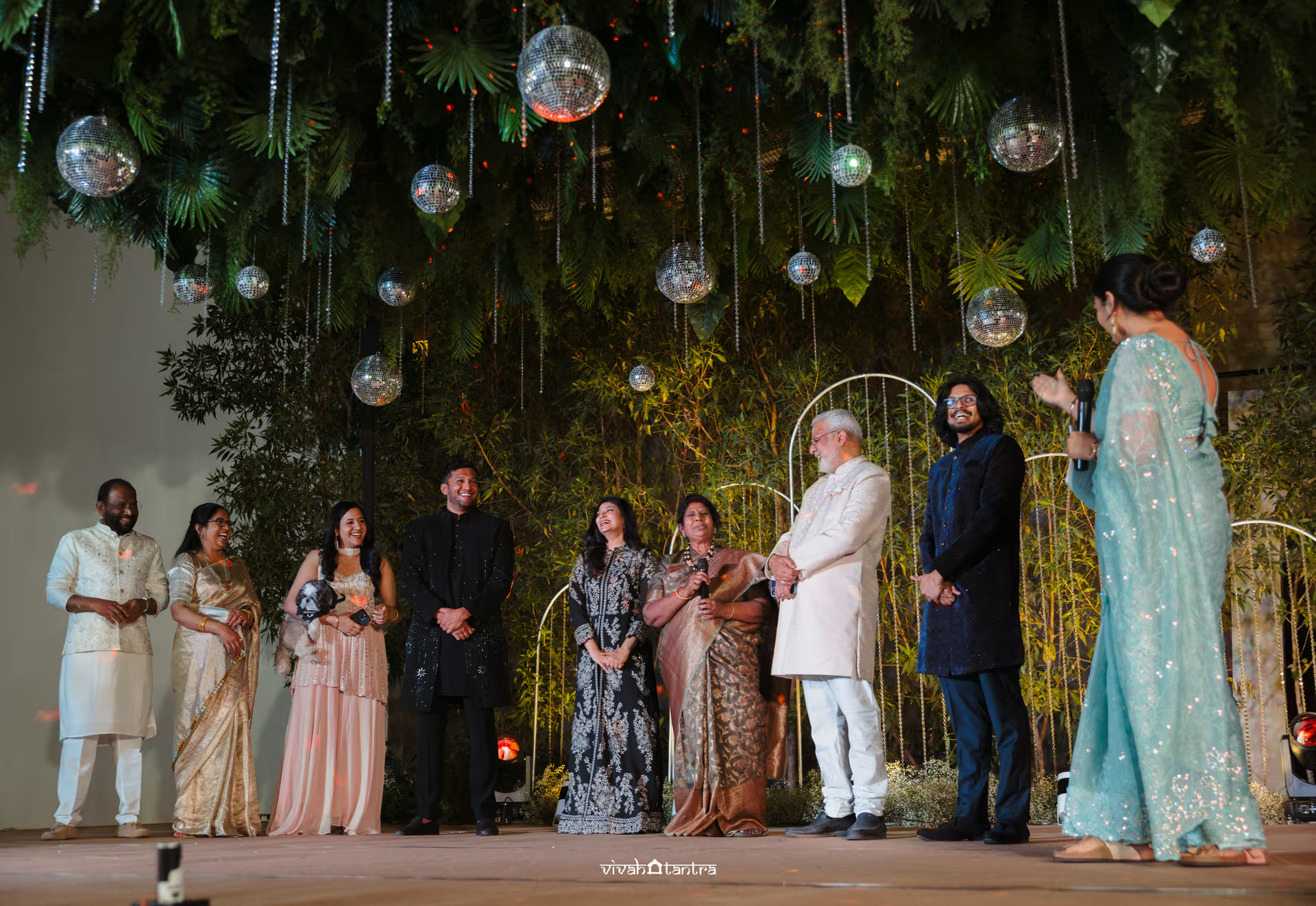
Couples in 2025 increasingly choose layered, immersive decor that tells a story instead of purely decorative themes.[web:36][web:39][web:42] Floral installations, scented zones, and lighting are most impactful when they connect back to your personalities—for example, using hanging florals in your favorite colors or projecting meaningful visuals rather than generic patterns. Let guests discover little hints of your journey in menus, signages, favors, and playlists so personalization feels intimate, not overwhelming.[web:36][web:40][web:48]
Design Choices That Impact Guest Experience
Design is not just about how the wedding looks but how it feels to move through. Layout, lighting, and spacing directly affect comfort, with research showing that venue size, density, and designated zones influence guest ease, temperature, and social interaction.[web:41][web:49] Simple, well-planned seating, good sightlines to the stage or mandap, and intuitive signage often matter more to guests than highly complex backdrops.
Interactive elements like message walls, live sketch artists, or DIY photo corners encourage conversation and create memorable moments without needing heavy decor in every corner. Dividing the space into areas for dancing, lounging, and dining helps different age groups enjoy the celebration at their own pace and keeps the energy balanced.[web:41][web:49]
Balancing Aesthetics with Comfort and Practicality
It is possible to have a visually stunning wedding that is also easy to navigate and comfortable. The key is choosing a few strong visual statements—like a floral arch, ceiling installation, or dramatic entrance—and keeping the rest of the design clean and functional.[web:39][web:40][web:48] Avoid cluttering aisles and pathways, and ensure there is space for waitstaff, photographers, and guests to move without bumping into decor.
Using your home style as a guide helps keep choices authentic and practical. If you gravitate to warm neutrals and natural textures at home, echo similar tones with linens, flowers, and stationery so the environment feels familiar and soothing rather than staged. Flexible furniture layouts and modular seating also support comfort, letting you adjust configurations between ceremony, cocktails, and reception without losing the design language.[web:41][web:45]
Venue Support Needed for Personalized Weddings
A personalized wedding is much easier to execute when the venue actively supports your ideas. Helpful venues are open to outside decorators or have curated panels, offer flexible decor policies, and provide enough time for setup and teardown of detailed installations.[web:4][web:47] They also help you plan guest flow, parking, and staging areas so that added decor elements do not create bottlenecks.
Modern venues increasingly provide strong AV infrastructure, lighting options, and hybrid indoor–outdoor layouts that accommodate immersive experiences such as projection mandaps, live performances, and dramatic floral storytelling.[web:36][web:42][web:46] Online galleries, virtual tours, and mood boards from previous events can further guide you in selecting what to personalize and what to keep simple.
Why Flexible Venue Spaces Matter
Flexible venues let you design the celebration around your story instead of forcing your ideas into a rigid layout. Spaces that combine lawns with covered or indoor areas, and can scale from intimate to 1000+ guests, allow smooth transitions between rituals, cocktails, and receptions without moving to multiple locations.[web:4][web:45][web:47] This flexibility also supports weather backup plans and different guest needs across the day.
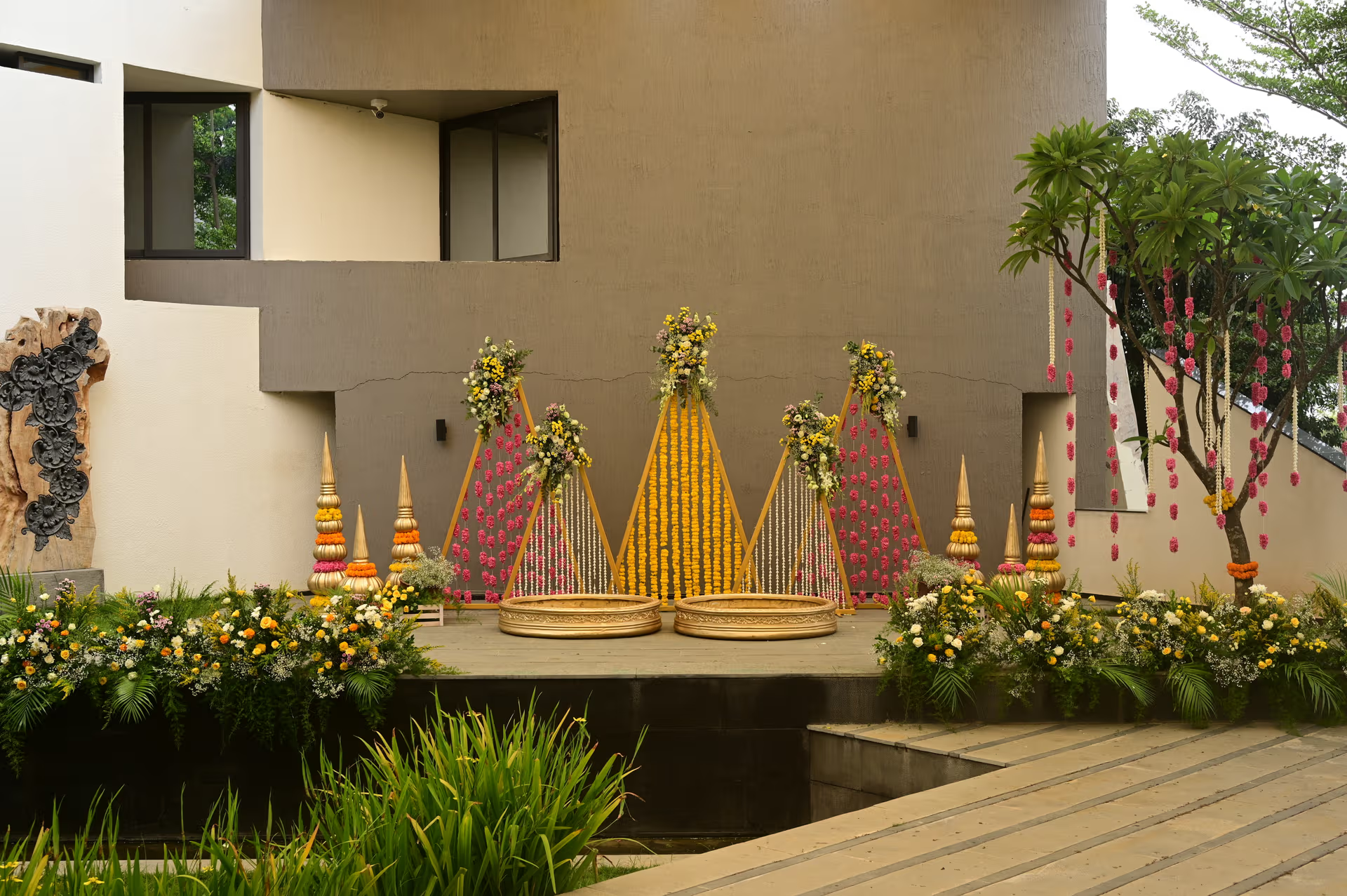
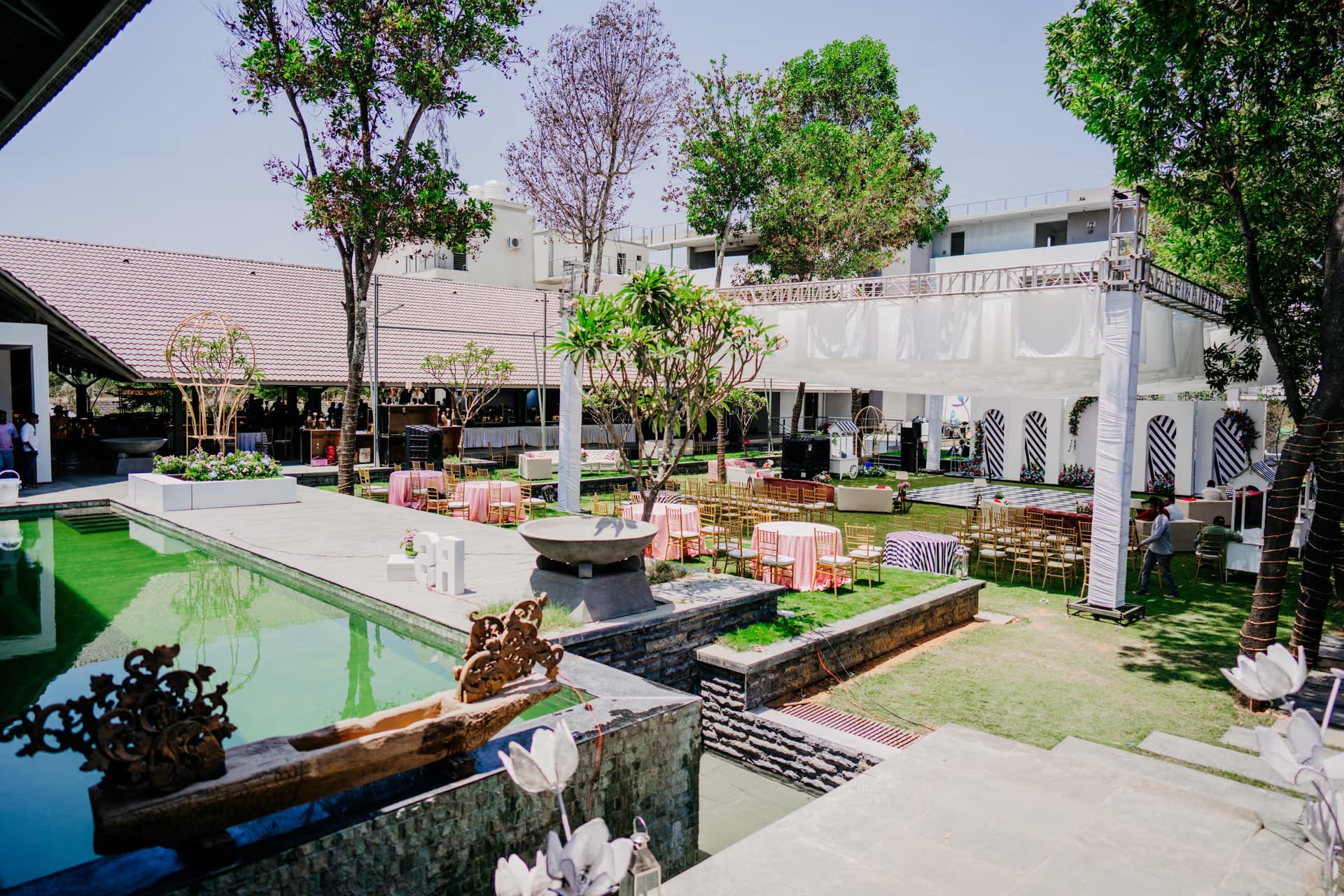
Wiwaha in Bangalore is a Balinese-inspired venue that demonstrates this balance of personalization and practicality well. It offers a combined indoor–outdoor lawn setup for 100–1000 guests, around 30 on-site rooms in some listings, and parking capacity ranging from about 100 to 250 cars across platforms, giving couples room to customize experiences while maintaining smooth guest flow and logistics.[web:1][web:3][web:4][web:11] With outdoor decor allowed and both in-house and outside services possible depending on the package, couples can bring in unique concepts without sacrificing comfort.[web:2][web:4][web:11]
FAQs
Q: How can we make our wedding unique without overspending on personalization?
A: Focus on high-impact elements like one statement floral installation, a distinctive entry, or personalized vows, while keeping the rest of the decor minimal. Many 2025 trends emphasize a few strong focal points rather than styling every corner, which helps control costs while still feeling special.[web:39][web:40][web:48]
Q: What design choices matter most for guest comfort?
A: Key factors include adequate space per guest, clear walkways, good ventilation or climate control, accessible restrooms, and separate zones for dancing and lounging so people can choose their comfort level.[web:41][web:49]
Q: How do we balance a bold theme with practicality?
A: Limit bold elements to areas that photograph and function well—like the mandap, stage, or entrance—and keep tables, aisles, and service routes more neutral. Use modular furniture and movable decor so layouts can adapt as the event progresses.[web:41][web:48]
Q: Why should we consider a venue with both indoor and outdoor spaces?
A: Hybrid venues offer built-in contingency for weather, different atmospheres for various functions, and smoother guest flow. They also make it easier to personalize each segment of the celebration without changing locations.[web:4][web:43][web:47]
Q: How important is venue support in planning a personalized wedding?
A: Very important. Venues that allow flexible decor, have solid AV and layout options, and offer experienced coordination support make it much easier to execute unique ideas without last-minute chaos.[web:4][web:47][web:49]
Wedding Planning Checklist
- Define 3–5 aspects of your story you want guests to notice in the design.
- Choose a color palette inspired by your home or shared favorites so the look feels authentic.
- Select one or two statement decor elements (e.g., floral ceiling, entrance, mandap) instead of many small pieces.[web:36][web:39][web:44]
- Map guest movement from entry to ceremony, cocktails, dinner, and exit to avoid bottlenecks.[web:41][web:49]
- Prioritize comfort features: seating, ventilation, shading, and easy restroom access.
- Shortlist venues with flexible indoor–outdoor spaces, generous capacity, and clear decor policies.[web:4][web:47]
- Discuss personalization options (lighting, AV, layouts) with the venue team early.[web:2][web:47]
- Schedule virtual or in-person walkthroughs to test layouts and guest flow scenarios.[web:41][web:49]
- Align your planner, decorator, and venue on a simple floor plan and installation timeline.
- Lock in backup plans for weather, technical issues, and last-minute decor changes.
Conclusion
Balancing personalization with practicality is about making intentional choices: telling your story through a few meaningful details while designing layouts and experiences that keep guests comfortable. Flexible, well-equipped venues and thoughtful decor planning ensure your wedding feels like you without unnecessary complexity or stress.[web:41][web:47][web:49]
Venues like Wiwaha in Bangalore—offering indoor–outdoor spaces for up to around 1000 guests, on-site rooms, and substantial parking—make it easier to customize decor and flow while maintaining smooth logistics and guest comfort.[web:1][web:3][web:4][web:11] If venue decisions feel overwhelming, prioritizing properties designed around guest movement, flexibility, and hospitality can help you create a wedding that is both deeply personal and wonderfully seamless.